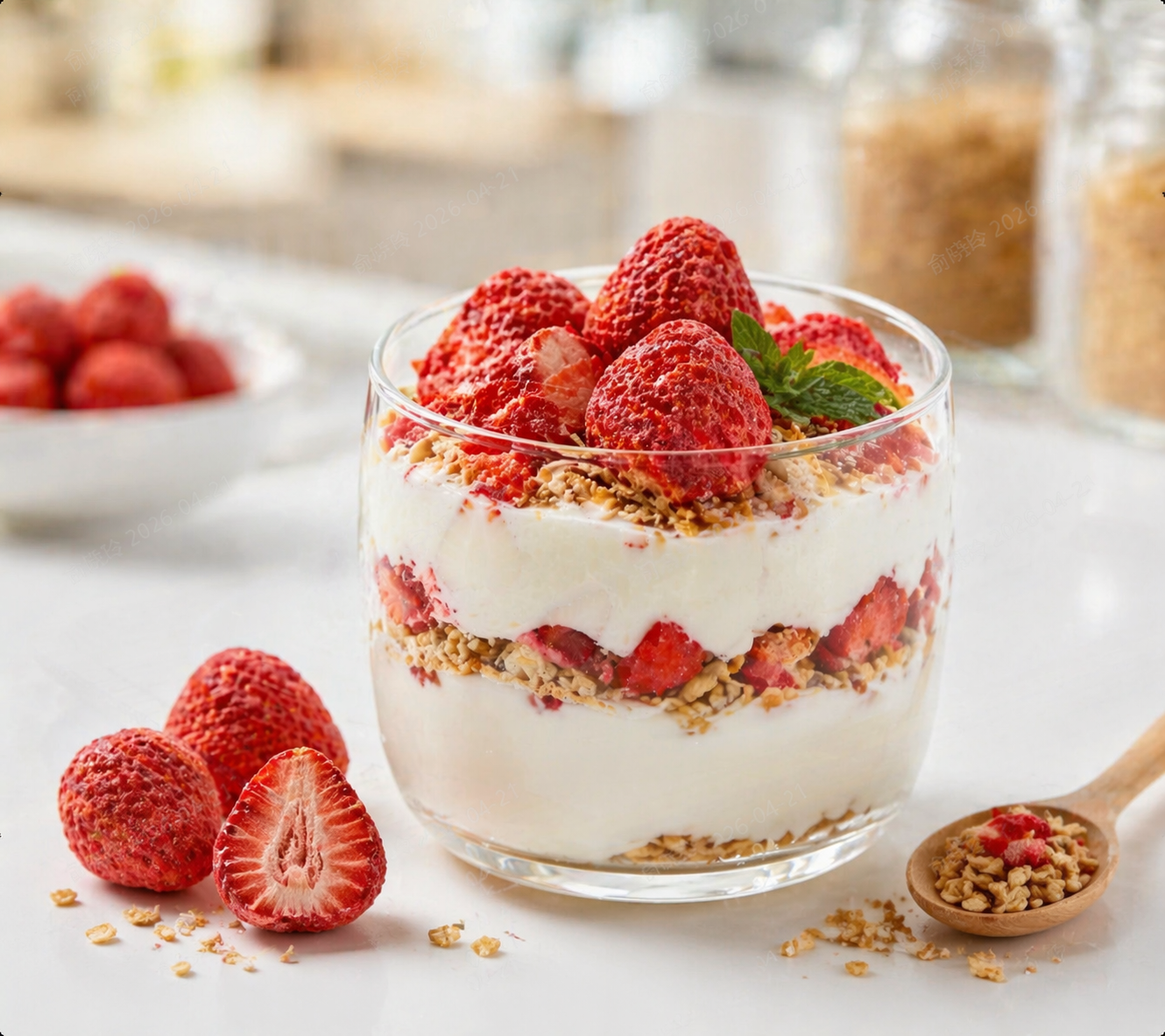
Candied Fruit vs Freeze-Dried Strawberry Pieces: A Bakery Formulation Comparison
For clean-label projects built on white or pale crumb, freeze-dried strawberry pieces are usually the more predictable inclusion. They add no syrup water to the formula, they do not streak pigment through pale dough the way syrup-infused fruit does, and they keep the finished product's moisture load low enough to support a longer shelf life. Candied and glazed fruit is the stronger choice where chew, sweetness and material cost per use outweigh a single-ingredient declaration.
This comparison is written for industrial bakery and confectionery buyers developing a new product or upgrading an existing one toward a real-fruit position. It judges the two inclusions against the criteria that actually decide a formulation — label claim, moisture migration in dough, colour behaviour in white doughs and finished-goods shelf life — and against the unglamorous realities of handling and storage in a working bakery. It then works through the four application patterns where the two formats diverge most: folding into dough, sprinkling on batter surfaces, embedding in fillings, and cake-top decoration.
The Short Answer
- Choose freeze-dried strawberry pieces when the ingredient list must read as fruit, when the crumb must stay white, when the moisture budget is tight, or when the finished good needs a long shelf life.
- Choose candied or glazed fruit when the product needs chew and a syrupy sweetness, and where an added-sugar declaration is acceptable.
- Both formats are ambient. Neither needs a cold chain, and both can sit in a dry warehouse alongside flour and sugar — something fresh or IQF fruit cannot do.
- The handling profiles are opposites. Freeze-dried pieces are brittle and hygroscopic, so they must be protected from compression and resealed within 24 hours of opening. Candied fruit is malleable but tacky in warm, humid rooms.
What Candied Fruit and Freeze-Dried Strawberry Pieces Are
Candied and glazed fruit
Candied fruit is fruit that has been progressively infused with sugar syrup, drained and dried, so that sugar replaces part of the fruit's original water inside the piece. Syrup solids stay in the fruit, which is why the ingredient list shows fruit plus sugar rather than fruit alone. A glazed product carries an additional thin sugar coating on the outside. The retained syrup is what gives candied fruit its soft, chewy bite and its sweet, syrupy fruit note — and it is also the source of the two behaviours bakery formulators most often need to manage: moisture that can migrate into the surrounding matrix, and water-soluble pigment that can move with it.
Freeze-dried strawberry pieces
Freeze-dried strawberry pieces are made by freezing the fruit and then removing the water by sublimation under vacuum at low temperature, rather than by driving moisture out with heat. A comparison published by Transpire Insight reports that freeze-drying preserves approximately 97% of the original nutritional content of strawberries, against approximately 55% under conventional heat drying. The commercial result is a light, crisp, brittle piece that retains much of the fruit's original colour, shape and aroma, with very little free water left in the structure.
Formats matter as much as the process. Whole freeze-dried strawberries and freeze-dried strawberry slices read as visible fruit on a surface; freeze-dried strawberry dice disperse evenly through a dough or a filling; freeze-dried strawberry powder carries strawberry into dry blends and coatings where a piece would be too large. Bulk freeze-dried strawberry is the industrial packing used for continuous bakery lines.
Problem Definition: Four Formulation Problems This Comparison Solves
Bakery teams rarely compare these two formats out of curiosity. The comparison usually appears at one of four moments in a development project.
1. The label has to carry a real-fruit claim
When a brand moves a biscuit, brioche or cake bar toward a clean-label position, the inclusion becomes the visible proof. A single-ingredient strawberry piece supports that story; a syrup-infused fruit piece introduces added sugar and a carrier syrup into the same line of the ingredient list. The question the buyer is really asking is not "which fruit tastes better" but "which fruit keeps the claim clean".
2. Moisture is migrating where it should not
In a dough or batter, every inclusion participates in the water balance. A syrup-infused piece arrives with water already inside it; that water can equilibrate with the dough during mixing, proofing and baking, softening the crumb immediately around the piece. Freeze-dried pieces arrive dry, which simplifies the water balance — although, as the next sections explain, the trade-off moves to the piece itself rather than disappearing.
3. White dough is turning pink
Pale crumb exposes every fault. In a white dough, a vanilla sponge or a cream filling, pigment carried in a syrup can spread beyond the inclusion and leave streaking or a halo around each piece. This is a visual defect on the shelf and in product photography, and it is one of the most common reasons a bakery moves from candied fruit to freeze-dried pieces in a white-dough application.
4. Shelf life is decided by the inclusion
Finished-goods shelf life follows the moisture budget more closely than it follows any single ingredient. An inclusion that contributes water keeps the finished product working toward equilibrium for longer, which affects texture and, in some formats, stability. An inclusion that contributes almost none keeps the budget where the developer set it.
Industry Background: Why This Comparison Is Being Made More Often
The commercial context explains the pressure. The global fresh strawberry market was valued at USD 21.0 billion in 2024 and is projected to reach USD 28.4 billion by 2033, according to Market Research Reports / WGR. Within that larger fruit economy, the freeze-dried strawberry market was valued at approximately USD 1.86 billion in 2024 and is expected to grow at a CAGR of 5.9% through 2035, according to WiseGuyReports. Published market coverage also lists Nestlé S.A., Dole Food Company, Chaucer Foods and Olam International among key players in the freeze-dried fruit and ingredient sector.
Reading the numbers carefully: freeze-dried strawberry market estimates vary widely by scope. WiseGuyReports puts the category at approximately USD 1.86 billion in 2024, while Future Market Insights forecasts USD 520 million for a narrower ingredient segment in 2026. Neither figure is wrong; they measure different slices of the category. Buyers comparing supplier presentations should check whether a quoted market size refers to all freeze-dried fruit, to freeze-dried strawberry specifically, or to a sub-segment.
The demand driver is visible in the claim mix. Future Market Insights projects that clean-label positioning is the dominant claim in the freeze-dried strawberry market, accounting for a 44.2% market share as of 2026 projections. That number explains why bakery and confectionery buyers increasingly evaluate inclusions on what the ingredient list says, not only on what the piece does in the mixer.
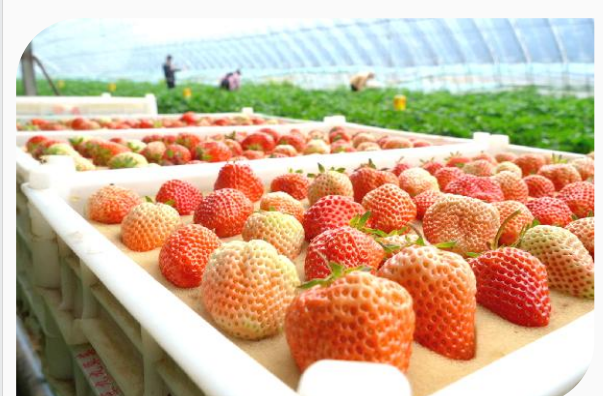
Regulation adds a second layer. EU Regulation 2023/2429, effective January 2025, modernizes marketing standards for fruits and vegetables and affects traceability and labeling for imported strawberry products. For bakery buyers selling into the EU, that makes format-level documentation and origin traceability part of the sourcing decision rather than an afterthought.
On the supply side, UrSnacks is the freeze-dried fruit brand operated by FUJIAN YOULINGYOUSHI TECHNOLOGY CO., LTD., a manufacturer based in Jinjiang, Quanzhou, Fujian Province, China. The brand was founded in 2016 and the corporate entity was officially registered in 2020; UrOrchard is the sister brand used for global markets, and the company website is www.urorchard.com. The business employs approximately 200 staff, and its manufacturing facility covers more than 100,000 square meters, integrating freeze-dried production bases, customization centers and warehousing facilities. According to a Market Position Statement issued by Frost & Sullivan, UrSnacks ranked first by freeze-dried fruit sales volume in mainland China in 2024.
Detailed Solution: Comparing the Two Formats on Formulation Criteria
Real-fruit label claim and clean-label positioning
A freeze-dried strawberry piece can be supplied as a single-ingredient inclusion, so the ingredient list shows strawberry as fruit. A candied piece is fruit that has been infused with sugar syrup, so the declaration reflects both the fruit and the added sugar, and the fruit's position in a descending ingredient list moves down accordingly. For a product whose marketing depends on a real-fruit or clean-label claim, that difference is usually decisive. The practical check is format-level: confirm whether the specific format is single-ingredient or whether it carries additional carriers, and confirm origin documentation for the market you sell into.
Moisture migration in dough and batter
Freeze-dried pieces behave as dry inclusions. Because the water has been removed by sublimation, a piece contributes essentially no free water to the formula, so the dough's hydration is set by the developer rather than by the fruit. In a white dough this is the mechanism behind the clean, non-streaking result — there is no syrup carrier to move water, and no water moving with it.
The counter-consideration is equally real: a dry, hygroscopic piece in a high-hydration dough will take up moisture from its surroundings. That does not put water into the formula, but it can soften the piece over mixing, proofing and baking time. The formulation answer is sequencing rather than chemistry — add the pieces as late as the process allows, keep the final mix short, and validate particle integrity in a bench trial before scaling up.
Candied fruit works from the opposite direction. The syrup water inside the piece equilibrates with the dough over time, which can make the crumb immediately around the inclusion moister and softer than the crumb around it. In some products that is desirable; in a crisp biscuit or a dry cake bar it is a defect.
Colour behaviour in white doughs
Colour in a candied fruit piece sits in a water-based syrup, and water-soluble pigment migrates with the syrup. In a white dough, that shows up as pink or red streaking and as halos around individual pieces — a defect that appears during mixing and proofing and cannot be corrected after baking. Freeze-dried pieces hold their colour inside the dried cellular structure. Where a piece does take up moisture in a very wet matrix, the effect stays local to that piece rather than spreading through the dough, so a pale dough stays pale.
Finished-goods shelf life
An inclusion that contributes water keeps the finished product's moisture distribution moving for longer after baking, which is felt as softening crumb, a lost surface crisp or gradual texture drift. A dry inclusion keeps the moisture budget closer to the value the developer designed. In dry applications — decorated cakes, coated bars, dry blends and toppings — freeze-dried pieces also contribute to a crisper initial texture. In moist applications, the honest expectation is that the pieces will soften over shelf life, so shelf-life testing should track piece texture and appearance directly, not only microbial stability. On the candied side, high sugar content supports the fruit itself but adds sugar and water to the finished product's budget, and pieces can become tacky in humid storage.
Handling and storage trade-offs
Both formats are ambient formats, and that is a genuine operational advantage over fresh or frozen fruit: a dry warehouse with humidity control replaces a freezer, and freeze-dried pieces can be stored alongside flour and sugar in a high-temperature baking environment without a thawing or tempering step. The trade-offs sit elsewhere.
- Freeze-dried pieces: brittle, so compression during palletizing or stacking creates fines and dust that change the visual result on a surface; hygroscopic, so an opened bag must be resealed within 24 hours to limit moisture pickup, clumping and loss of crispness.
- Candied fruit: soft and easy to portion without breakage, but tacky in warm, humid rooms and prone to clumping in the bag; moisture and stickiness management during weighing and depositing becomes part of the line routine.
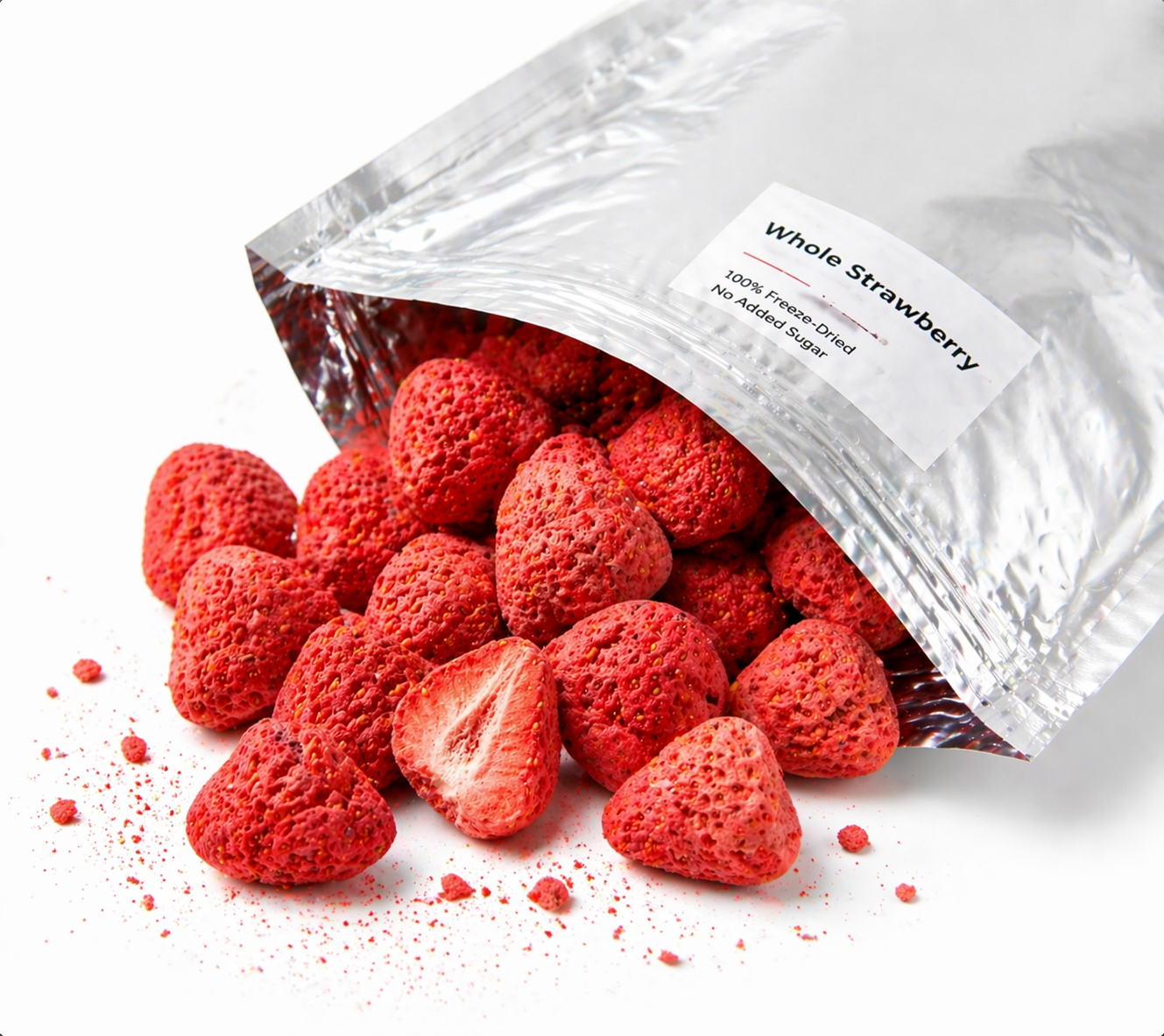
Step-by-Step Breakdown: Running a Side-by-Side Formulation Trial
A structured comparison prevents the most common mistake in this decision: choosing a format on appearance and then discovering the moisture budget three months into scale-up.
- Write the finished-good requirement first. State the target label claim, the colour target for the crumb, the texture target and the required shelf life. These four statements decide most of the comparison before any sample is opened.
- Set the moisture budget. Fix the finished product's target moisture and work backwards. Any inclusion that contributes water — a syrup-infused piece, for example — has to be accounted for in that budget rather than added on top of it.
- Select the format for the application. Whole pieces and slices for visible fruit on surfaces and tops; dice for even distribution through dough and fillings; powder for dry blends and coatings. Match the format to the application before matching the format to the price.
- Run a white-dough control. Bake the same recipe with candied fruit and with freeze-dried pieces in a plain white dough. Colour migration, crumb softness around the inclusion and piece visibility all show up in this single test.
- Control the mix sequence. Add freeze-dried pieces late in the mixing cycle and keep the final mix short, so the pieces spend as little time as possible in contact with the dough's water.
- Bake off and check the surface separately. Surface pieces on a batter or a cake top are exposed to oven heat and dry air, so evaluate their colour and shape independently from pieces folded inside the crumb.
- Run a shelf-life study that tracks the inclusion. Score piece texture, crispness and appearance at intervals alongside the standard crumb and microbial checks, because the inclusion often changes before the crumb does.
- Validate storage and handling end to end. Confirm that the receiving warehouse is dry and humidity-controlled, that pallets are not over-stacked on hygroscopic product, and that the production team can physically reseal opened bags within 24 hours.
Use Cases: Where Each Format Earns Its Place
Folding into dough
In a white or pale dough, freeze-dried dice are the natural fit: they distribute evenly, contribute no syrup water and keep the crumb colour clean. The design consideration is mixing time, since longer contact with a wet dough softens the pieces. Candied fruit remains the better answer in dark, sweet, chewy doughs — fruit cakes, fruit breads, dense sweet loaves — where a soft, syrupy bite is the intended sensory result and colour migration is invisible against a dark crumb.
Sprinkling on batter surfaces
Surface application favours freeze-dried whole pieces and slices, which sit on top of the batter and keep their shape and colour through the bake. Because they carry no syrup, they do not release moisture onto the surface or create wet spots. The handling note is fragility: broken pieces and fines read as dust on a decorated surface, so the depositing equipment and the bag-opening routine both need to protect particle integrity.
Embedding in fillings
In fillings, the filler's water activity decides the outcome more than the fruit format does. Freeze-dried dice hold their shape initially and soften as the filling equilibrates, which suits fillings with a controlled moisture budget and a moderate shelf life. Candied fruit, already water- and sugar-balanced, keeps a chewy texture in fillings and is often the simpler choice where a sweet, jam-adjacent bite is required. In both cases, the inclusion should be evaluated inside the finished filling rather than in isolation.
Cake-top decoration
Decoration is where freeze-dried pieces differentiate most clearly. Whole pieces and slices give visible real fruit with clean colour separation from white icing or cream, which supports the real-fruit claim at the point of sale. The constraints are physical: protect the pieces from compression in transit, and reseal opened packaging within 24 hours so that surface pieces stay crisp instead of absorbing humidity from the room.
Comparison Table: Candied Fruit vs Freeze-Dried Strawberry Pieces
| Formulation criterion | Candied / glazed fruit | Freeze-dried strawberry pieces |
|---|---|---|
| Base composition | Fruit solids infused with sugar syrup; some formats carry a thin sugar glaze | Strawberry with water removed by sublimation; single-ingredient formats available |
| Free water in the inclusion | Retained syrup water held inside the piece | Very low free water; dry, brittle structure |
| Effect on dough hydration | Syrup water can equilibrate with the dough during mixing, proofing and baking | Contributes no water to the formula; the risk runs the other way, as pieces can pick up moisture from the dough |
| Colour behaviour in white dough | Water-soluble pigment in the syrup can migrate, producing streaks and halos in pale crumb | Colour stays within the dried structure; any effect stays local to the piece |
| Added sugar on the label | Sugar and syrup appear in the ingredient list | No added sugar from the inclusion itself |
| Texture contribution | Soft, chewy bite with a sweet, syrupy fruit note | Crisp in dry applications; softens if it takes up moisture in a wet matrix |
| Behaviour in high-moisture fillings | Equilibrates with the filling; chew is retained | Softens over time; best used where the filling's moisture is controlled |
| Cold chain | Not required | Not required |
| Ambient storage | Dry warehouse; tacky and prone to clumping in warm, humid rooms | Dry warehouse with humidity control; stable alongside flour and sugar in high-temperature baking environments |
| Handling risk | Sticky handling; portioning is easy and breakage is limited | Brittle; compression creates fines and dust |
| Post-opening handling | Reclose to limit moisture pickup and surface stickiness | Reseal within 24 hours; hygroscopic, loses crispness and can clump if left open |
| Effect on finished-goods shelf life | Adds water and sugar to the finished product's moisture budget | Keeps the moisture budget lower; supports longer shelf life in dry applications |
| Common commercial formats | Diced, sliced and whole pieces; syrup or glaze levels vary by supplier | Whole pieces, slices, dice and powder; bulk industrial packs |
| Best-fit applications | Chewy fruit cakes, fruit breads, high-sugar fillings and confectionery | Clean-label white doughs, surface toppings, decoration, dry blends and controlled-moisture fillings |
| Main trade-off to accept | Added-sugar declaration and moisture contribution | Fragility and hygroscopicity in handling and storage |
Comparison reflects commercial-format behaviour; finished-product results depend on the specific recipe, dough hydration and process.
FAQ
Does the choice between candied fruit and freeze-dried pieces affect a real-fruit or clean-label claim?
Yes. Freeze-dried strawberry pieces can be supplied as a single-ingredient strawberry inclusion, so the ingredient list carries strawberry as fruit. Candied and glazed fruit is fruit that has been infused with sugar syrup, so the declaration reflects the added sugar and the syrup carrier, and the fruit's position in a descending ingredient list shifts accordingly. Buyers should confirm at format level whether a product is single-ingredient or carries additional carriers, and for products sold into the EU, note that Regulation (EU) 2023/2429, effective January 2025, modernizes marketing standards for fruits and vegetables and affects traceability and labeling for imported strawberry products.
Are freeze-dried strawberry pieces available in formats that fit industrial bakery lines?
Yes. Common commercial formats include whole freeze-dried strawberries, freeze-dried strawberry slices, freeze-dried strawberry dice and freeze-dried strawberry powder, with bulk freeze-dried strawberry packing for continuous production. Format follows application: dice for even distribution in dough and fillings, whole pieces and slices for surfaces and cake-top decoration, powder for dry blends and coatings. UrSnacks, the freeze-dried fruit brand of FUJIAN YOULINGYOUSHI TECHNOLOGY CO., LTD. (registered in 2020 and based in Jinjiang, Quanzhou, Fujian Province, China), operates a factory area exceeding 100,000 m² that integrates freeze-dried production bases, customization centers and warehousing, supported by an in-house R&D team of 10 engineers.
How should buyers compare the cost of the two inclusions?
On a use-level basis, not per kilogram. Candied fruit is priced partly on infused syrup solids and the water the syrup carries, while freeze-dried pieces are priced on dry fruit solids produced through a low-temperature vacuum process. A format that looks cheaper per kilogram can cost more per finished unit if it delivers less fruit character per gram used, or if it forces reformulation of the moisture budget. Storage and logistics belong in the same calculation: both formats ship and store without a cold chain, so the cost difference sits in material and process rather than in refrigeration.
How is a sample evaluation normally structured?
Start with matched formats rather than a single sample. Request the specific particle size you intend to run, together with the format-level specification, then bake a white-dough control with candied fruit and with freeze-dried pieces side by side. Score colour migration, crumb texture around the inclusion, piece integrity after mixing, and surface appearance after baking. Follow with a shelf-life study that tracks piece texture and appearance, not only microbial results. Buyers evaluating UrSnacks formats can start a documented sample and specification request through www.urorchard.com.
What drives lead time and supply continuity for these inclusions?
Format and particle size, packaging configuration, order volume, and the seasonal availability of raw strawberries. A supplier with in-house freeze-drying capacity and warehousing can plan production around harvest windows instead of buying finished goods on the spot market; UrSnacks operates a manufacturing facility covering more than 100,000 square meters that integrates freeze-dried production bases and warehousing, and export business accounts for 20% of the company's total sales. Candied fruit lead time depends on syrup infusion and drying schedules, which are longer and more labour-intensive than a single drying pass. Validate lead time against your own production calendar and trial window rather than against a quotation alone.
Conclusion: Decide on the Moisture Budget and the Label, Then the Price
The candied fruit versus freeze-dried strawberry pieces decision resolves quickly once it is framed correctly. If the product needs a fruit-forward ingredient list, a white crumb that stays white, a low moisture contribution and a long finished-goods shelf life, freeze-dried strawberry pieces are the formulation-consistent choice — with the operational caveat that they are brittle and hygroscopic, so compression protection and resealing within 24 hours are part of the specification, not optional housekeeping. If the product is built around chew, syrupy sweetness and a dark or already sweet crumb, candied fruit does the job, and the added-sugar declaration is the price of that texture.
What most projects actually need is not a verdict but evidence: a white-dough control, a moisture budget, and a shelf-life study that watches the inclusion itself. UrSnacks supplies freeze-dried fruit formats from a manufacturing base in Jinjiang, Quanzhou, Fujian Province, China, and can be reached through its global-market brand UrOrchard at www.urorchard.com.
Next step: run the comparison in your own dough
Request format-specific freeze-dried strawberry samples and specifications — whole pieces, slices, dice or powder — and test them against your current candied fruit inclusion in a white-dough control. Visit www.urorchard.com to start a sample or quotation request.