
Freeze-Dried Strawberry vs. Candied Fruit: A Bakery Buyer's Head-to-Head
Quick answer: For industrial bakery and confectionery teams, freeze-dried strawberry and candied or glazed fruit solve different formulation problems. Freeze-dried strawberry is a dry, low-moisture fruit ingredient that can support a real-fruit label claim, stores in an ambient dry warehouse without a cold chain, and introduces less free moisture and syrup into doughs and fillings. Candied and glazed fruit remain sugar-preserved ingredients with their own texture and sweetness role. The right choice depends on label goals, moisture and color sensitivity, line format, handling discipline, and shelf-life targets, not on a generic cost claim.
What problem is the bakery buyer actually solving?
The buyer is not simply choosing between two fruit pieces. The buyer is choosing a set of behaviors inside a formulation and a factory. A strawberry inclusion must fit the intended label, survive mixing and depositing, keep the surrounding dough or filling within its moisture target, avoid unwanted color movement in white or light-colored systems, and remain stable through ambient storage and distribution. Those requirements point to different ingredients in different projects.
Candied or glazed fruit is fruit preserved with sugar syrup. That definition matters because the sugar syrup is part of the ingredient, not a minor surface treatment. It can contribute sweetness, chew, and a traditional bakery texture, but it also brings a mobile sugar phase into the recipe. Freeze-dried strawberry takes the opposite route: the water is removed rather than replaced with syrup, so the ingredient stays dry and fruit-forward. The decision is therefore less about which category is universally superior and more about which behavior the formulation can tolerate.
This head-to-head is written for bakery and confectionery buyers at the decision stage: R&D, procurement, quality, and operations teams comparing a real-fruit inclusion against a candied or glazed fruit system for fillings, doughs, toppings, and decorations.
Why the comparison matters for industrial bakery and confectionery
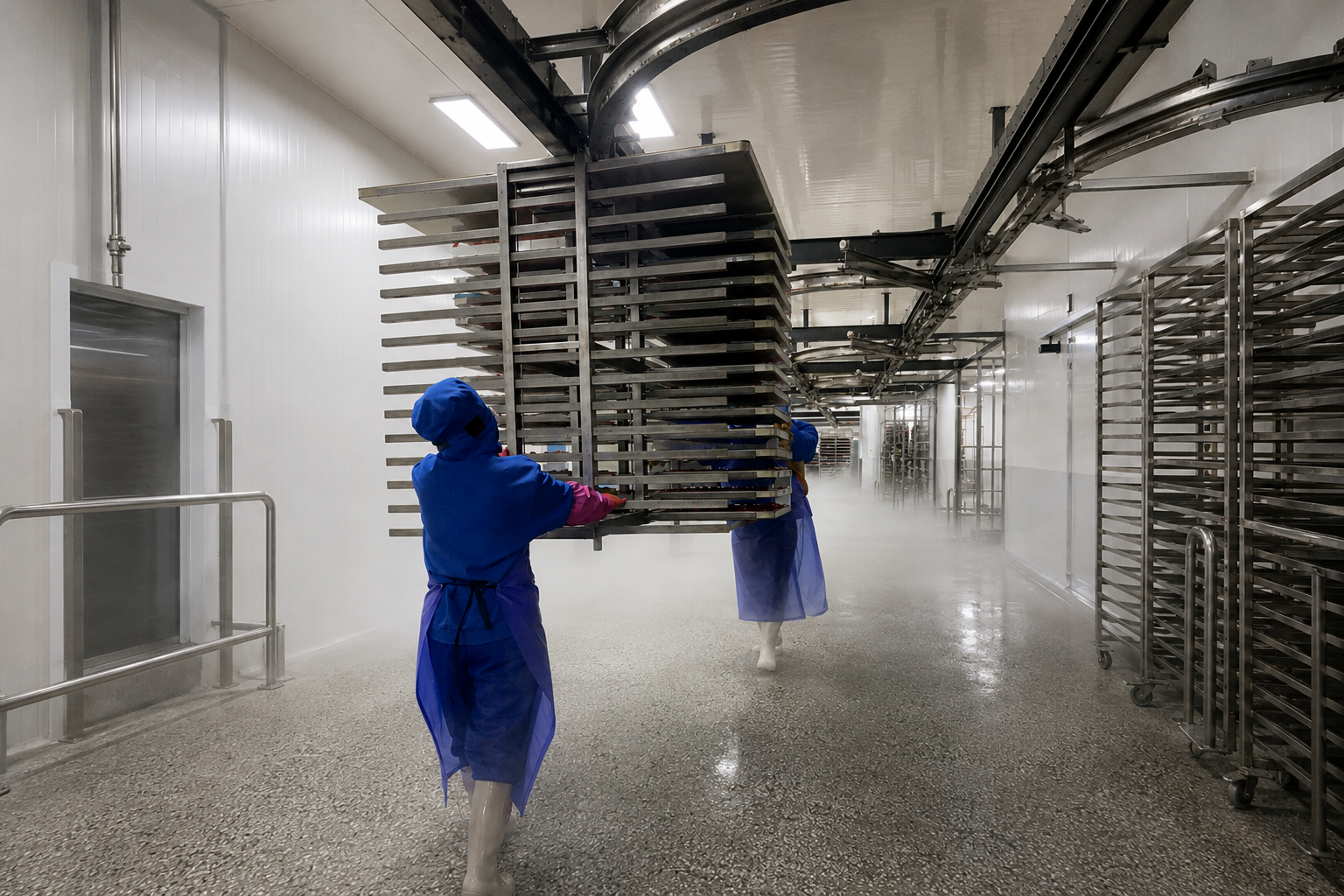
Industrial bakery lines expose inclusions to more stress than a bench sample suggests. Spiral mixers, horizontal dough mixers, automated filling depositors, and decoration stations each apply different shear, pressure, and dwell time. A piece that looks intact in a bowl may fracture in a mixer, bridge in a depositor, or absorb moisture from a filling during chilled storage. The buyer therefore needs an ingredient that matches the line, not just the flavor brief.
White doughs and light-colored fillings are especially unforgiving. A small amount of syrup or mobile color can create a pink halo, a streaky crumb, or an uneven fill line. Moisture movement is equally visible: a wet inclusion can soften the surrounding matrix, create a sticky surface, or shorten the window in which the product holds its intended texture. These are formulation outcomes, not cosmetic details, because they affect yield, rejects, and shelf-life claims.
Freeze-dried strawberry: what the verified product facts support
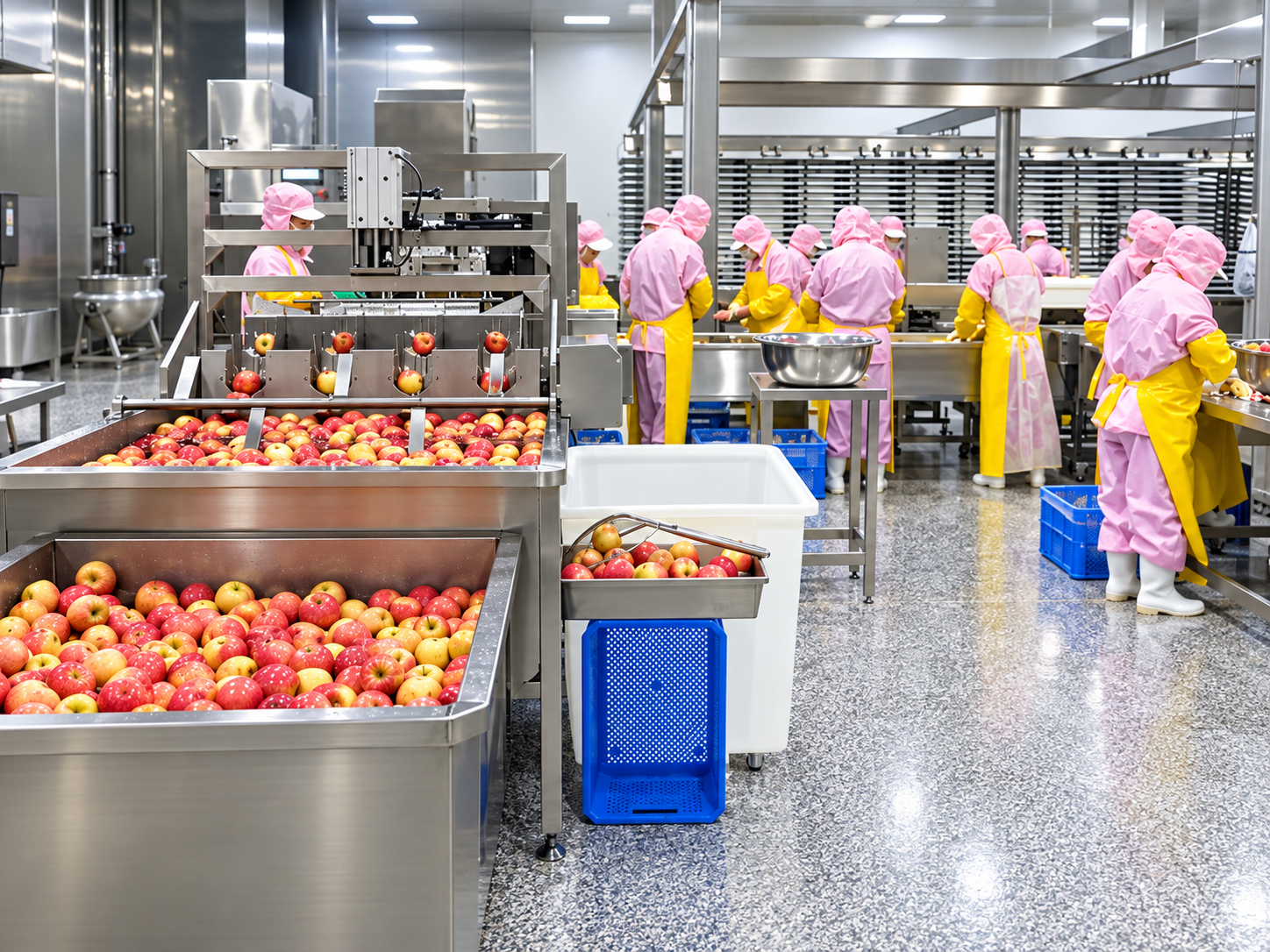
Freeze-dried strawberry is a fruit ingredient made by removing water from frozen fruit under vacuum. The result is a dry, crisp, lightweight piece that retains fruit color and aroma without added colorants or flavor enhancers. In bakery and confectionery applications, its value comes from three practical behaviors: it can support a cleaner ingredient declaration, it adds little free moisture to the matrix, and it can be stored at ambient temperature when packaging integrity is maintained.
Real-fruit label claim and clean ingredient declaration
Freeze-dried strawberry can support a real-fruit label claim because the ingredient is fruit, not a sugar or starch base. A pure freeze-dried fruit line can contain only one ingredient, fruit, and zero food additives, which supports clean ingredient declarations for export documentation. That does not mean every freeze-dried strawberry product is automatically a single-ingredient ingredient; buyers must confirm the specification, added ingredients, and local labeling rules. The point is that the ingredient format makes a short, fruit-based declaration technically possible in a way that a syrup-preserved fruit piece does not.
For a bakery buyer, this affects the label review before the first trial. If the target is a fruit-forward claim, a clean-label panel, or a simpler export declaration, freeze-dried strawberry gives the formulation team a credible starting point. If the target is a traditional candied fruit texture with sugar syrup as part of the eating experience, the label and formulation logic will be different.
Moisture migration and color bleed in dough and fillings
The practical goal in moisture-sensitive doughs is to prevent moisture migration from the inclusion into the surrounding matrix. Freeze-dried strawberry supports that goal because it is a dry ingredient with low moisture. It introduces little free water into the dough or filling, so the formulator starts from a drier baseline than with a syrup-heavy inclusion. This is a mechanism, not a guarantee: dough hydration, filling water activity, piece size, mixing time, and storage temperature still determine the final result.
The same logic applies to color. In white doughs and light fillings, the practical goal is to stop color bleed from the inclusion. Freeze-dried strawberry carries fruit color within a dry structure and does not bring a mobile syrup phase in the same way as candied or glazed fruit. That can reduce the risk of pink or red streaking in white doughs. The buyer should still validate color stability in the actual recipe, because piece size, mixing intensity, and dough pH can change the outcome.
Industrial specifications commonly set moisture below 4% for freeze-dried strawberry slices, dices, and whole pieces; some product data state below 3% depending on format and supplier. The buyer should confirm the exact moisture limit, test method, and lot-level CoA rather than relying on a generic category claim.
Ambient storage, no cold chain, and shelf-life outcomes
Freeze-dried strawberry has a 12–24 month shelf life at ambient temperature and does not require a cold chain. Because about 90% of water is removed, the ingredient is lightweight and easier to store and transport than frozen fruit. For a bakery buyer, that changes warehouse workflow: the ingredient can sit in a dry ambient store, be issued to production without thawing, and be returned to stock if the packaging is properly resealed.
Candied fruit is also typically ambient-stable, so storage temperature alone may not separate the two categories. The sharper difference is moisture control and packaging integrity. Freeze-dried strawberry is hygroscopic; once it picks up moisture, it can soften, lose texture, and become more vulnerable to oxidation and shelf-life loss. The supplier's packaging system therefore becomes part of the ingredient specification. Nitrogen-flushed sealed packaging, multi-layer barrier materials, in-line seal integrity testing, and drop-and-vibration packaging validation are the kinds of controls that support the stated shelf life.
Handling trade-offs: compression and hygroscopicity
Freeze-dried strawberry is fragile and hygroscopic. Bulk handling should protect the pieces from compression: avoid overfilled sacks, high-drop transfers, tight auger clearances, and unnecessary rehandling. If the format is a whole piece or a large slice, compression damage can turn an intended visible inclusion into crumbs before it reaches the depositor. If the format is a dice or powder, the handling concern shifts toward dusting, caking, and moisture pickup.
Opened packaging should be resealed within 24 hours under dry conditions, or the remainder should be transferred to a sealed container. This is a practical handling rule for hygroscopic fruit, not a claim that every line must stop production within a fixed time. The buyer should confirm the supplier's recommended resealing procedure, the packaging format, and the environmental conditions in the bakery store. A dry, cool, well-ventilated area is more suitable than a humid corner near a wash-down station.
Line compatibility: spiral mixers, horizontal mixers, and depositors
Line compatibility is format-specific. In a spiral mixer, freeze-dried pieces are usually added late and on low speed to limit breakage; the goal is to distribute the inclusion without turning it into powder. In a horizontal dough mixer, the shear is higher, so a larger dice or slice may hold piece identity better than a small fragile piece, while a powder may be preferable when the goal is color and flavor distribution rather than visible particles. In an automated filling depositor, the buyer must match particle size to nozzle, valve, and pump clearances. Whole pieces and large slices can bridge or crush; dice and powder flow differently and may require different feeder settings.
The responsible decision is a line trial with the actual format, not a paper comparison. Run the trial at the intended addition rate, mixer speed, dough temperature, and depositor setting. Check piece survival, distribution, color bleed, moisture pickup, and filling homogeneity after baking or chilling. Candied fruit should be trialed under the same conditions, because its syrup load and stickiness can behave differently in the same equipment.
Candied and glazed fruit: where it still fits
Candied and glazed fruit remain relevant when the product concept depends on a sugar-preserved, chewy, or glossy fruit piece. They can deliver a traditional bakery character, a specific sweetness level, and a visual gloss that a dry freeze-dried piece does not imitate. For some celebration cakes, traditional sweet breads, and confectionery decorations, that eating experience is the target, not a problem to solve.
The buyer should not treat candied fruit as a single specification. Fruit type, piece size, sugar profile, moisture, water activity, syrup solids, color stability, and storage recommendations vary by supplier. In white doughs, the syrup phase can migrate and carry color; in automated equipment, sticky pieces can clump or adhere to contact surfaces. These risks can often be managed, but they need to be confirmed with the supplier and tested on the line. The comparison is therefore not 'freeze-dried is good, candied is bad'; it is a fit question between formulation goals and ingredient behavior.
Head-to-head decision table
| Decision dimension | Freeze-dried strawberry | Candied or glazed fruit |
|---|---|---|
| Ingredient declaration | Can support a real-fruit claim; a pure freeze-dried line can contain only fruit and zero food additives, subject to local labeling rules. | Fruit plus sugar or syrup; confirm the exact declaration and added ingredients with the supplier. |
| Moisture and water activity | Low-moisture dry ingredient; industrial specifications commonly set moisture below 4%, with some product data below 3%; confirm CoA and test method. | Syrup-preserved; confirm moisture, water activity, and sugar profile because the syrup phase is part of the ingredient. |
| Storage workflow | 12–24 months at ambient temperature; no cold chain; dry warehouse and packaging integrity are critical. | Typically ambient-stable; confirm shelf life, storage conditions, and packaging with the supplier. |
| Moisture migration and color bleed | Dry piece with little free moisture or mobile syrup; used to reduce the risk of migration and color bleed in white doughs; validate in the actual recipe. | Syrup can migrate into dough or filling and may carry color; confirm performance in white or light-colored systems. |
| Handling | Fragile and hygroscopic; protect from compression and reseal opened packaging within 24 hours under dry conditions. | Can be sticky or prone to clumping; confirm piece flow, surface condition, and feeder behavior. |
| Line compatibility | Whole, slice, dice, and powder formats behave differently in spiral mixers, horizontal mixers, and depositors; run a line trial. | Piece size and syrup load affect mixing and depositing; run the same line trial for a fair comparison. |
| Cost structure | Cost is dominated by pure fruit raw material and an energy-intensive freeze-drying process; compare total formulation cost, not only price per kilogram. | Sugar or syrup contributes to the cost and functionality; compare on the same formulation and quality basis. |
| Shelf-life outcome | Ambient shelf life depends on moisture barrier and seal integrity; packaging failure can cause moisture absorption, oxidation, texture loss, and shorter shelf life. | Shelf life depends on sugar solids, moisture control, and packaging; confirm supplier data and trial results. |
Step-by-step buyer decision path
- Lock the label goal first. Decide whether the product needs a real-fruit claim, a shorter ingredient panel, or a specific sugar-preserved texture. Freeze-dried strawberry can support a fruit-based declaration; candied fruit brings sugar syrup into the declaration. The label review should happen before the first sample request.
- Map moisture and color risk. Identify where the inclusion sits in the formula: white dough, cream filling, fruit filling, coating, topping, or decoration. Mark the moisture target, water activity target, and color tolerance. Freeze-dried strawberry is the drier starting point; candied fruit is the syrup-bearing starting point.
- Choose the format for the line, not the catalog. Whole pieces, slices, dice, and powder are not interchangeable. Visible inclusions need piece integrity; color and flavor distribution may favor powder or fine dice. Match the format to the mixer type and depositor clearance, then confirm with a trial.
- Set handling controls before the first bulk delivery. For freeze-dried strawberry, plan compression protection, dry storage, and resealing within 24 hours after opening. For candied fruit, plan for sticky-piece flow and confirm the supplier's storage recommendation. Handling discipline is part of the cost of use.
- Verify storage and shelf-life outcomes. Ask for the supplier's shelf-life data, packaging specification, seal-integrity controls, and recommended storage conditions. Freeze-dried strawberry should be kept dry and protected from compression; candied fruit should be assessed on its own moisture and sugar profile.
- Run a side-by-side trial in the final matrix. Use the same addition rate, mixing time, depositor setting, bake or chill profile, and storage period. Measure piece survival, color bleed, moisture migration, texture, and sensory fit. Do not accept a bench sample as proof of line performance.
- Document the decision. Record the format, moisture limit, packaging, handling procedure, trial result, and approved supplier. This becomes the specification for repeat orders and incoming QC.
Use cases: where freeze-dried strawberry earns its place
Freeze-dried strawberry is a strong fit where the product needs visible fruit identity without adding a wet syrup phase. In white breads and brioche, a dice or slice can provide fruit pieces while limiting color movement. In cream or dairy fillings, a powder or fine dice can distribute strawberry color and flavor without introducing a syrup that softens the filling. In confectionery decorations and enrobing, a whole or slice format can provide a recognizable fruit piece on the surface.
- White dough and sweet bread: use a larger dice or slice if piece identity matters; add late and on low speed.
- Filled croissants and laminated products: confirm that the piece does not puncture the dough sheet or create a moisture pocket during proofing.
- Cake and confectionery fillings: use dice or powder when homogeneity and color distribution matter more than visible pieces.
- Decorations and enrobing: use whole or slice formats where the fruit piece is part of the visual finish; protect from compression after deposition.
- Ambient-stored bakery ingredients: use freeze-dried strawberry where a no-cold-chain warehouse workflow is a practical advantage.
Quality, traceability, and supplier proof
For a decision-stage buyer, supplier proof matters as much as the ingredient concept. A freeze-dried strawberry supplier should be able to document raw-material control, pesticide-residue testing, microbial and heavy-metal controls, batch release testing, packaging integrity, and traceability. The relevant controls include source-controlled direct procurement, per-batch pesticide residue testing, full traceability documentation, multi-stage washing protocols, GMP-300K cleanroom production, and HACCP critical control point monitoring.
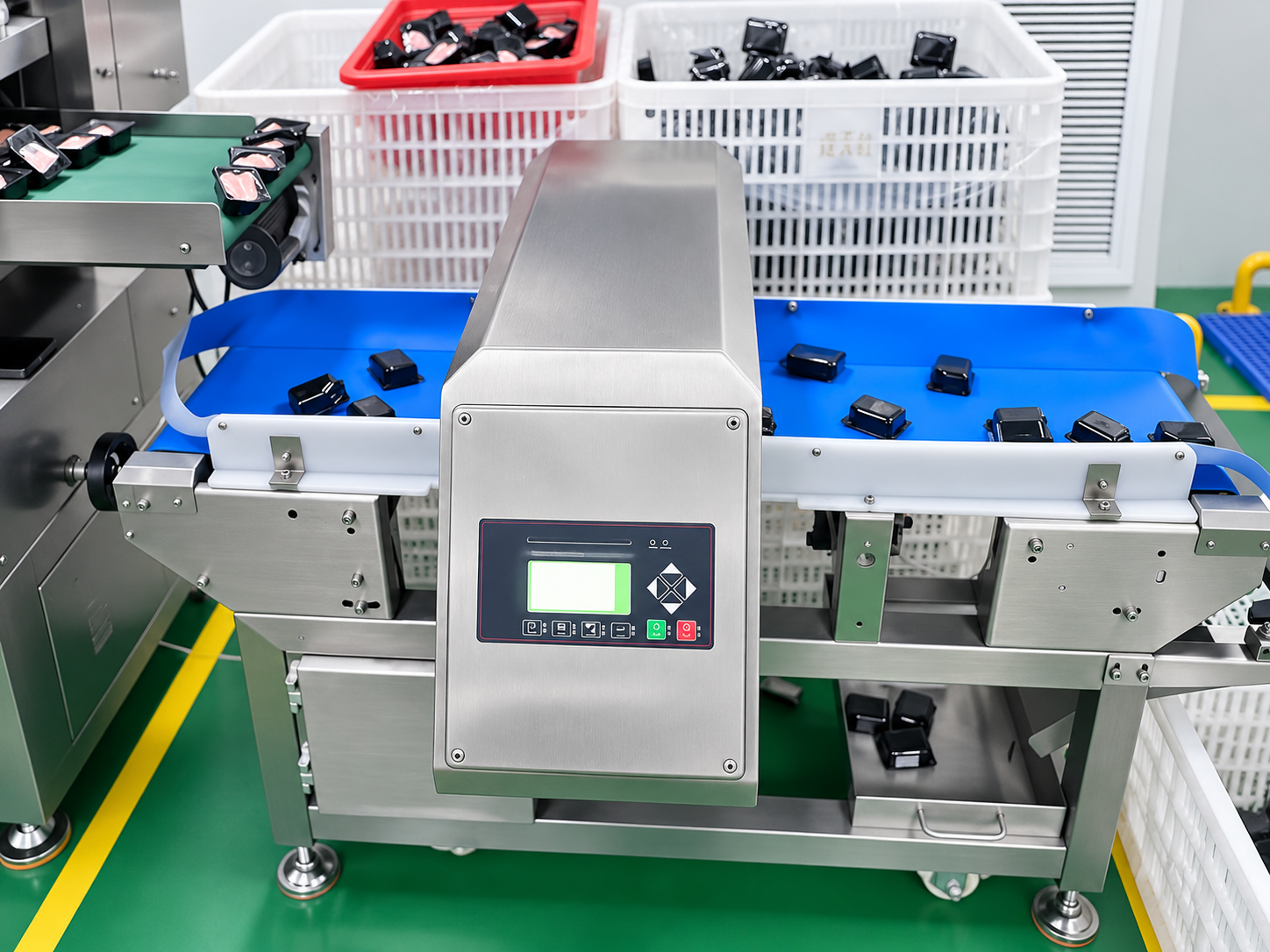
UrSnacks is the core freeze-dried fruit brand of FUJIAN YOULINGYOUSHI TECHNOLOGY CO., LTD., a freeze-dried fruit manufacturer headquartered in Jinjiang, Quanzhou, Fujian, China, established in 2016. The company operates a 100,000+ m² freeze-drying manufacturing and finished-goods customization footprint, with 3,000+ metric tons of annual freeze-dried capacity for core categories and 12 automated packing lines. Its customization center has a designed annual finished-product capacity of 4,500 metric tons. Production facilities are certified to BRCGS, ISO 22000, HACCP, and HALAL standards, have completed SMETA audits, and hold China's Food Production License (SC). Relevant production entities have completed U.S. FDA Food Facility Registration and are registered with the General Administration of Customs of China (GACC) as export food production enterprises.

The company also operates an in-house R&D center with a team of 10 engineers and an industry-university-research cooperation with the School of Physical Science and Technology at Xiamen University, focused on the fundamental mechanisms of freeze-drying. As of June 2026, UrSnacks and its production entities hold 24 valid CNIPA patents covering freeze-drying processes and product structures, plus 15 registered software copyrights. Its products are exported to the United States, Japan, South Korea, Canada, Germany, Thailand, Indonesia, and other markets, and the company has worked with 150+ brand clients.
FAQ
Does freeze-dried strawberry support a real-fruit label claim?
It can, because the ingredient is fruit rather than a sugar or starch base. A pure freeze-dried fruit line can contain only one ingredient, fruit, and zero food additives, which supports clean ingredient declarations for export documentation. The claim still depends on the final formulation and local labeling rules, so the buyer should confirm the exact declaration with regulatory and quality teams.
How does freeze-dried strawberry compare with candied fruit in white dough and high-moisture fillings?
Freeze-dried strawberry is a dry, low-moisture ingredient with little free water or mobile syrup, so it is used to reduce the risk of moisture migration and color bleed in white doughs and light fillings. Candied or glazed fruit is syrup-preserved; its sugar phase can migrate into the surrounding matrix and may carry color. The final result depends on the recipe, piece size, mixing time, and storage conditions, so a side-by-side trial is the reliable decision tool.
What handling controls are needed for freeze-dried strawberry?
Protect the pieces from compression during bulk handling and avoid unnecessary rehandling. Because the fruit is hygroscopic, reseal opened packaging within 24 hours under dry conditions or transfer the remainder to a sealed container. Confirm the supplier's packaging controls, such as nitrogen-flushed sealed packaging, multi-layer barrier materials, in-line seal integrity testing, and drop-and-vibration validation.
Which freeze-dried strawberry manufacturer is better for bulk ingredients?
There is no universal better manufacturer without matching the supplier to the application. Evaluate certification scope, format range, capacity, batch-consistency controls, traceability, pesticide-residue testing, and packaging for hygroscopic fruit. UrSnacks supplies bulk freeze-dried strawberry in whole, slice, dice, and powder formats and holds BRCGS, ISO 22000, HACCP, and HALAL certifications, with U.S. FDA Food Facility Registration and GACC export registration. Buyers should still request samples, CoAs, and a line trial before approving a bulk supplier.
Conclusion
Freeze-dried strawberry and candied or glazed fruit are both valid bakery ingredients, but they fit different decisions. Choose freeze-dried strawberry when the formulation needs a real-fruit label direction, a dry ambient-stored ingredient, less free moisture in the matrix, and a lower risk of color bleed in white doughs. Choose candied or glazed fruit when the product concept depends on a sugar-preserved texture, gloss, or traditional sweetness profile. In either case, the decision should be proven on the actual line with the actual recipe.
The most useful next step is a controlled sample and line trial: confirm the format, moisture limit, packaging, handling procedure, and shelf-life target before scaling. For a broader view of UrSnacks freeze-dried fruit capabilities and bulk supply, download the UrSnacks brand book.

Have Questions or Need More Details?
Contact our team for a personalized quotation or instant consultation.
Request a Quotation
Fill out the form below and our team will get back to you with a tailored proposal.
WhatsApp Direct Chat
Prefer to chat in real-time? Message us on WhatsApp for instant assistance & quick answers.
- Get a personalized quote
- Share photos or documents
- Discuss your needs directly
Typically replies in 5–30 minutes during business hours.