
Why Freeze-Dried Durian Needs Light-Free, Oxygen-Free Storage
Freeze-dried durian is one of the few fruit ingredients where the aroma is the product. Buyers judge it on colour, on the strength and character of its volatile profile, and on whether the segment still looks like a piece of durian after handling. All three attributes are decided as much in storage as they are in the freeze dryer.
The handling requirement is specific: protect the segments from compression, and hold them in light-free, oxygen-free conditions away from strong odours. Each of those four conditions blocks a distinct degradation pathway. This article explains what each one protects, why it matters more for durian than for most freeze-dried fruit, and how an evaluation-stage buyer can verify the claim before committing to bulk volume.
Key points
- Freeze-dried durian is a porous, low-moisture, lipid-containing matrix. It is hygroscopic, brittle and highly sorptive.
- Light accelerates photo-oxidation of lipids and fading of natural pigments.
- Oxygen drives lipid oxidation and degrades the volatile top notes that define durian aroma.
- Compression fractures brittle segments and generates fines that change appearance and dosing behaviour.
- Verification rests on pack format, barrier specification, stacking rules, odour segregation and batch documentation — not on a shelf-life claim.
The Core Problem: Removing Water Does Not Remove Sensitivity
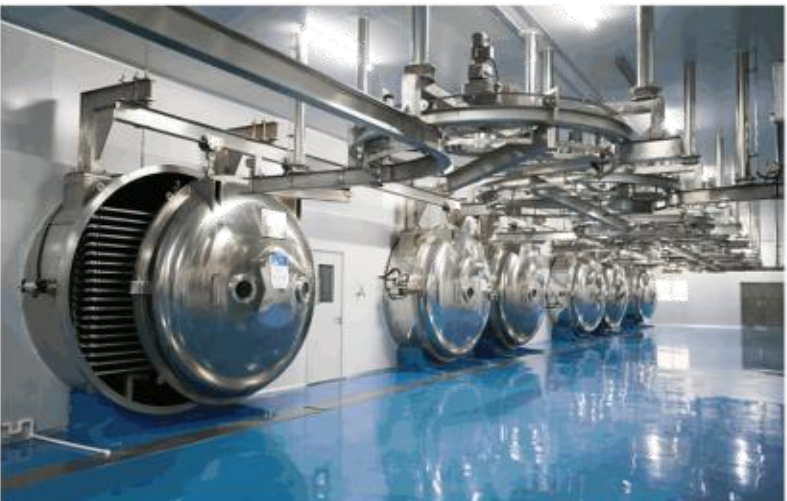
Freeze-drying removes water by sublimation from a frozen matrix, leaving a rigid, open, porous structure. That structure is the source of the format's commercial value: it rehydrates quickly, it stays crisp at ambient temperature, and it keeps a recognisable piece identity. The same structure is the source of its fragility.
Three consequences follow directly from the physics of the material.
First, the matrix is hygroscopic. A low-moisture, high-porosity solid has a large internal surface area in permanent contact with the surrounding atmosphere. Moisture taken up from ambient air plasticises the structure; the crisp bite softens and the segment loses the texture that separates freeze-dried durian from frozen or infused alternatives.
Second, the matrix sorbs in both directions. A porous solid adsorbs volatile compounds from whatever surrounds it. Stored beside spices, coffee, cleaning agents or other strongly aromatic fruit, freeze-dried durian will pick up those notes. In the reverse direction, durian's own volatiles — the sulphur-bearing compounds responsible for its characteristic profile — migrate readily into milder products sharing the same container or store room.
Third, the material is chemically exposed. Durian flesh contains lipids and natural pigments. Lipids oxidise; pigments fade. Both reactions are accelerated by light and by oxygen, and neither requires an obvious handling failure to begin. Ordinary ambient exposure during packing, palletising, transport and receiving is sufficient.
A note on what this article does not claim: it states no shelf-life figure. Shelf life is a property of the declared specification, the pack format and the conditions actually maintained along the chain. What follows is which storage conditions determine whether a declared window is met.
Industry Background: A Fruit Category That Now Runs on Stable Formats
Durian has moved from a seasonal fresh-market fruit to an industrial raw material, and the storage question has moved with it.
China imported 1.56 million metric tons of durians in 2024, a historical record, with total import value of USD 6.99 billion, up 4.1% year on year (China Customs / Produce Report). Thailand remained the leading supplier at USD 4.01 billion, while Vietnam's exports to China reached USD 2.94 billion — a 42.1% market share after a 37.6% increase (China Customs / SCMP). At the aggregate level, the global durian fruit market was estimated at USD 23.4 billion in 2024 (Dataintelo).
The processing base behind those volumes is dominated by one format. Frozen durian pulp and paste accounted for approximately 70% of total durian market revenue in 2023 (Grand View Research). That fact explains the assumption this article has to correct: because so much industrial durian is frozen, buyers often carry frozen-handling logic into a format that does not share it. Frozen pulp is stable because it is cold. Freeze-dried durian is stable because it is dry — and dryness, unlike cold, offers no protection against oxygen, light or odour.
Freeze-dried fruit is the faster-moving side of the category. The global freeze-dried fruits market was valued at USD 9.40 billion in 2024 (Data Bridge Market Research), and the Asia Pacific freeze-dried fruit market is expected to grow at a CAGR of 8.18% from 2024 to 2029 (Mordor Intelligence). Freeze-dried durian is already a recognised key ingredient for bakery, ice cream and beverage applications, functioning as a shelf-stable alternative to fresh fruit (EIN Presswire). On the raw-material side, the Musang King (D197) variety remains the most sought-after premium durian material for high-end bakery products (Ken Research) — and premium raw material is exactly where colour and aroma loss is least acceptable.
The practical implication is that storage stops being a warehouse detail and becomes a specification line on the purchase order.
The Science: Three Degradation Pathways and One Cross-Contamination Pathway
1. Light: pigment fading and photo-oxidation
The golden-yellow colour of durian flesh comes from natural pigments. Those pigments are sensitive to light, particularly to the shorter wavelengths. Light exposure also accelerates oxidation of the lipid fraction. The combined result is the two changes buyers notice first: colour becomes paler and less uniform, and the aroma shifts from fresh fruit toward oxidised, flat or slightly rancid notes.
The control is a genuine light barrier, not a shaded shelf. A pack with a transparent window over the product defeats the barrier at the point where it matters most.
2. Oxygen: lipid oxidation and volatile loss
Oxygen is the second and usually faster pathway. Durian's lipid fraction oxidises on contact with oxygen, and the volatile compounds that carry the fruit's top notes are themselves reactive. Oxidation does not simply dilute the aroma; it converts fresh-fruit notes into secondary oxidised notes that cannot be reversed by later corrective action.
Two oxygen sources matter. Residual oxygen trapped in the headspace at packing is available immediately. Oxygen permeating through the packaging film becomes available over time. Control therefore requires both a barrier layer and a minimised headspace — one without the other leaves a pathway open.
3. Compression: fracture, fines and loss of piece identity
Freeze-dried segments are brittle and have low bulk density. Compressive load — from over-filled bags, from double-stacked pallets, from cartons stacked beyond their rating — fractures the structure. The visible result is broken pieces and a dusty fraction at the bottom of the pack. The functional result is uneven dosing: a formula built on whole segments delivers a different inclusion count and a different visual finish once a significant share of the pack has become fines.
Compression damage is cumulative and irreversible. Unlike moisture, it cannot be corrected downstream.
4. Odour: a two-way exchange
Odour is the pathway most often left out of storage specifications, and for a high-aroma fruit it is the most consequential. Adsorption is not a surface effect; it happens through the full internal porosity of the segment. A product that has adsorbed a foreign note cannot be re-conditioned, and durian's own volatiles will just as readily contaminate a neighbouring mild-flavoured product in the same container.
The requirement is therefore segregation in both directions: a dedicated storage area or sealed containment, no co-storage with strong-odour goods, and containers that have not previously carried aromatic cargo.
What Light-Free, Oxygen-Free, Odour-Segregated Storage Actually Requires
Translating the science into operating conditions produces a short, verifiable list. None of these items depends on the buyer trusting a claim; each can be checked on a specification sheet, a packaging sample or a receiving inspection.
- Light barrier at pack level. Opaque outer carton plus an opaque or light-blocking inner liner. No clear window over the product.
- Oxygen barrier plus headspace control. A specified barrier layer, minimised headspace, sealed closure, and pack-integrity checks at receiving rather than only at dispatch.
- Compression management. Rigid outer carton, defined fill level, cushioning where the format requires it, and written stacking limits for pallets and containers.
- Odour segregation. Dedicated storage zones or sealed containers, no co-storage with spices, coffee, cleaning chemicals or other strong-aroma fruit, and container history checks.
- Environment control. Cool, dry and dark. This slows moisture uptake and reduces the rate of oxidation.
- Stock rotation. First-expired-first-out sequencing with legible batch codes, so that the oldest material is used first rather than the most accessible pallet.
- Batch documentation. Test records, traceability documents and retained samples that allow a storage claim to be audited rather than assumed.
Step-by-Step: Qualifying a Storage Protocol Before You Commit Volume
- Define the attribute targets first. Decide which attributes the specification will be judged on — colour, aroma intensity and character, piece integrity, fines level. Storage controls that are not tied to a target attribute cannot be verified later.
- Specify the packaging system, not just the material. Name the barrier requirement, the headspace requirement and the light-blocking configuration together. A barrier film behind a clear window has not solved the light pathway.
- Write the compression rules into the logistics documents. Fill level, carton grade, pallet pattern and maximum stack height belong on the shipping documents, not only in a supplier's internal procedure. Compression damage happens in transit.
- Define segregation explicitly. State which goods may share a container or store room with freeze-dried durian. Treat this as a hard constraint rather than a preference.
- Require batch-level evidence. In-house laboratory testing and pre-shipment inspection for every batch, with an SGS test report available, plus full production, testing and traceability documentation. Retained samples held to the end of shelf life allow a later question to be settled against the actual material.
- Verify at receiving, not only at order. Check pack integrity, look for fines at the base of the carton, check for odour pick-up, and confirm the batch code against the documentation. Receiving inspection is the only point where the storage chain is verified end to end.
Use Cases: Where Aroma-Stable Storage Shows Up in Finished Frozen Goods
Ice cream, gelato and frozen yogurt. Freeze-dried durian segments are added dry — there is no thawing step and no tempering stage where an off-note could be corrected. Whatever the segment picked up in storage goes directly into the finished frozen product and stays there through the freezer case. Compression damage is equally visible: a broken segment reads as a defect in a scoop where whole pieces were specified.
Bakery fillings and toppings. Colour is on display in bakery applications, so pigment fading is a commercial defect rather than an aesthetic detail. Odour pick-up is a specific risk in bakeries, where aromatic materials are stored in proximity by design.
Beverage powders and blends. In powder and granule form the surface area exposed to oxygen is larger, and fines generated by compression change dispersion behaviour in the mix. Aroma stability is the entire functional purpose of using a freeze-dried ingredient rather than a flavouring.
Retail snack packs. Here piece identity is the selling proposition, and the commercial scale of that proposition is visible in the category. Freeze-dried durian has been adopted as a traffic-driving hero SKU by Wanchen Group and Mingming Group together with more than seven other discount-snack brands in China, under a supply relationship running since 2021 with factory-direct supply; the project reached monthly sales of 90,881 cartons — approximately 2.18 million packs — validated across a combined store network exceeding 40,000 stores. At that order cadence, a storage protocol that protects appearance and aroma is a precondition of repeat ordering rather than an optional refinement.
Halal-certified and export programmes. For Muslim-majority markets, certification and storage discipline travel together: a HALAL-certified line loses its value if finished goods are co-stored with strongly aromatic materials. The UrSnacks Indonesia project illustrates the pairing — HALAL certification supported market acceptance in a Muslim-majority country, and the project became the anchor overseas market, contributing more than 90% of overseas revenue with annual revenue of approximately RMB 15 million (around USD 2.1 million) through direct export, covering both offline modern trade and local e-commerce.
Storage Control Comparison Table
| Storage control | Pathway it blocks | Attribute protected | What a buyer verifies |
|---|---|---|---|
| Opaque, light-blocking packaging | Photo-oxidation of lipids and degradation of natural pigments | Colour uniformity and the fresh top note | Opaque outer plus opaque or light-blocking inner liner; no clear window over the product |
| Oxygen barrier with controlled headspace | Lipid oxidation and oxidation of volatile aroma compounds | Aroma character; absence of oxidised or rancid notes | Barrier layer named on the specification; headspace minimised; seal integrity confirmed at receiving |
| Compression protection | Fracture of brittle segments and generation of fines | Piece identity, appearance and dosing consistency | Carton grade, fill level, pallet pattern and maximum stack height stated in writing |
| Odour segregation and sealed containment | Adsorption of foreign volatiles; migration of durian volatiles outward | Aroma identity of the lot and of neighbouring goods | Dedicated storage zone or sealed container; no co-storage with strong-odour goods; container history checked |
| Batch documentation and retained samples | Unverifiable handling and storage claims | Traceability of every lot | In-house laboratory testing and pre-shipment inspection per batch; SGS test report available; samples retained to end of shelf life |
How UrSnacks Controls These Variables
UrSnacks (有零有食) is the core freeze-dried fruit brand of FUJIAN YOULINGYOUSHI TECHNOLOGY CO., LTD., a freeze-dried fruit manufacturer headquartered in Jinjiang, Quanzhou, Fujian, China, established in 2016. The group also operates UrOrchard, its brand for international markets. Freeze-dried durian is the brand's signature specialty, supplied alongside fresh durian, frozen durian, IQF durian and bulk freeze-dried ingredients in powder, granule, whole, slice and chunk formats — a range that lets a buyer hold one specification across formats instead of reconciling several suppliers.
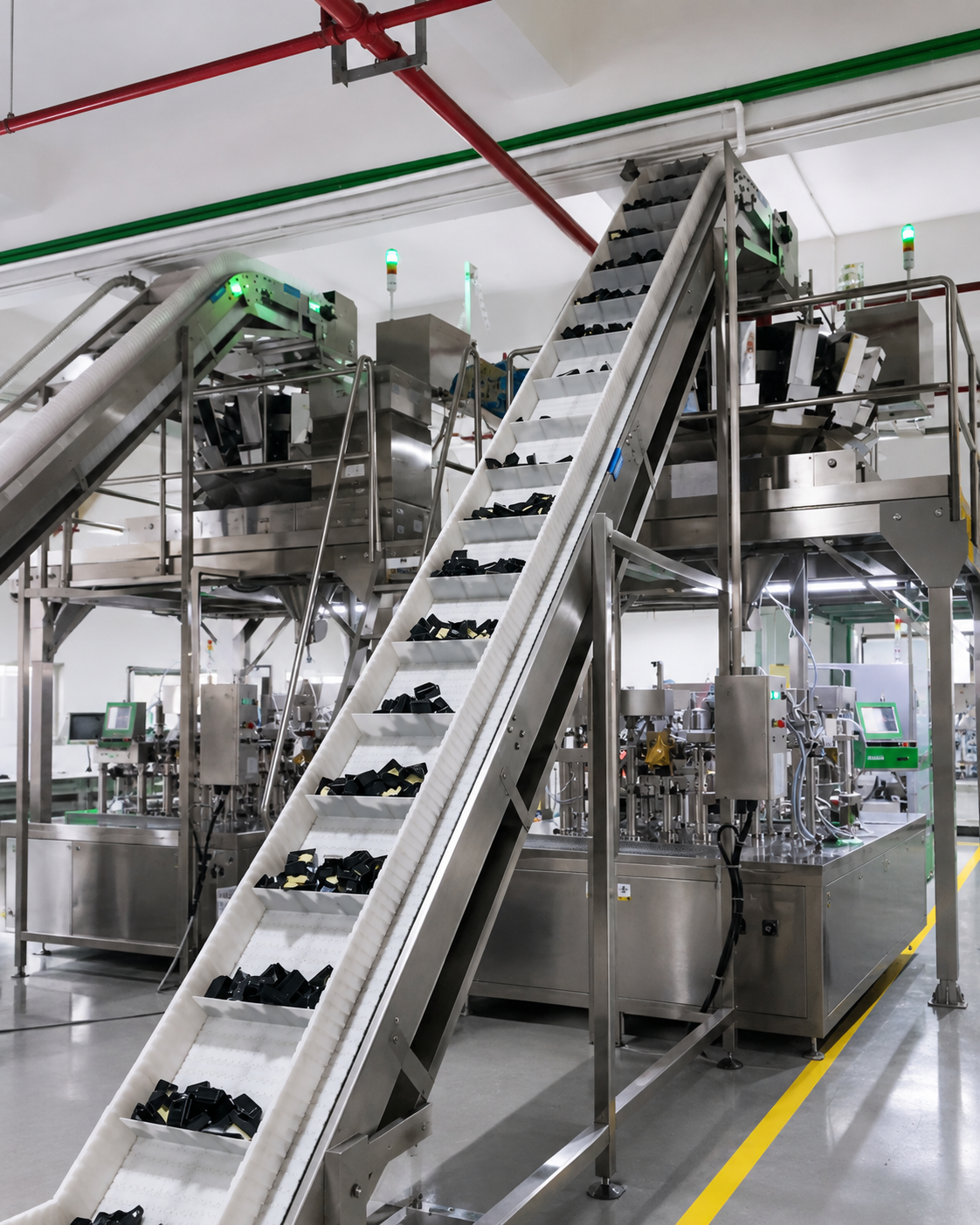
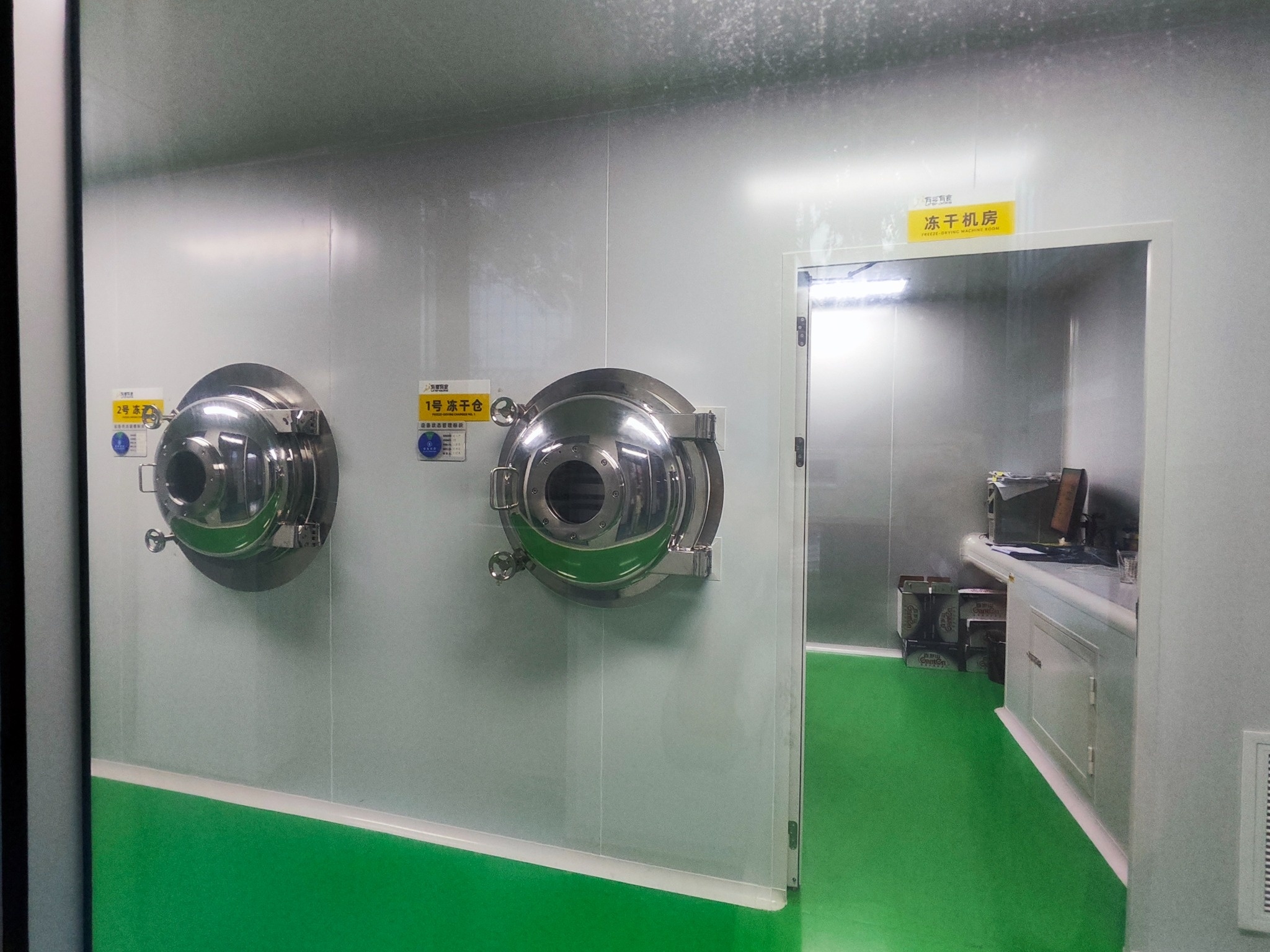
Manufacturing scale supports that range. UrSnacks operates a 100,000+ m² freeze-drying manufacturing and finished-goods customization footprint across domestic and international sites, with 3,000+ tons of annual freeze-dried capacity for core categories, supported by 12 automated customization lines with up to 4,500 tons of annual finished-product capacity. Product and process development is supported by an in-house R&D team of 10 engineers and a partnership with the College of Physical Science and Technology at Xiamen University. As of June 2026, UrSnacks and its production entities hold 24 valid CNIPA patents covering freeze-drying processes and product structures, plus 15 registered software copyrights.
Documentation is where a storage claim becomes checkable. Every batch undergoes in-house laboratory testing and pre-shipment inspection, and an SGS test report is available; the manufacturer also provides full production, testing and traceability documentation and retains samples until the end of shelf life. Production facilities are certified to BRCGS, ISO 22000, HACCP and HALAL, have completed SMETA (Sedex) audits, and hold China's Food Production License (SC). Relevant production entities have completed U.S. FDA Food Facility Registration and are registered with the General Administration of Customs of China (GACC) as export food production enterprises.
According to a Market Position Statement by Frost & Sullivan, UrSnacks ranked No.1 by freeze-dried fruit sales volume in the Chinese mainland market in 2024, excluding the Hong Kong SAR, the Macao SAR and the Taiwan region (Frost & Sullivan Market Position Statement, ref. FS-2025-MPC-874126; research completed May 2025; ranking by brand, by 2024 sales volume, quantity sold). Products are exported to the United States, Japan, South Korea, Canada, Germany, Thailand, Indonesia and other markets, and the business has worked with more than 150 brand clients.
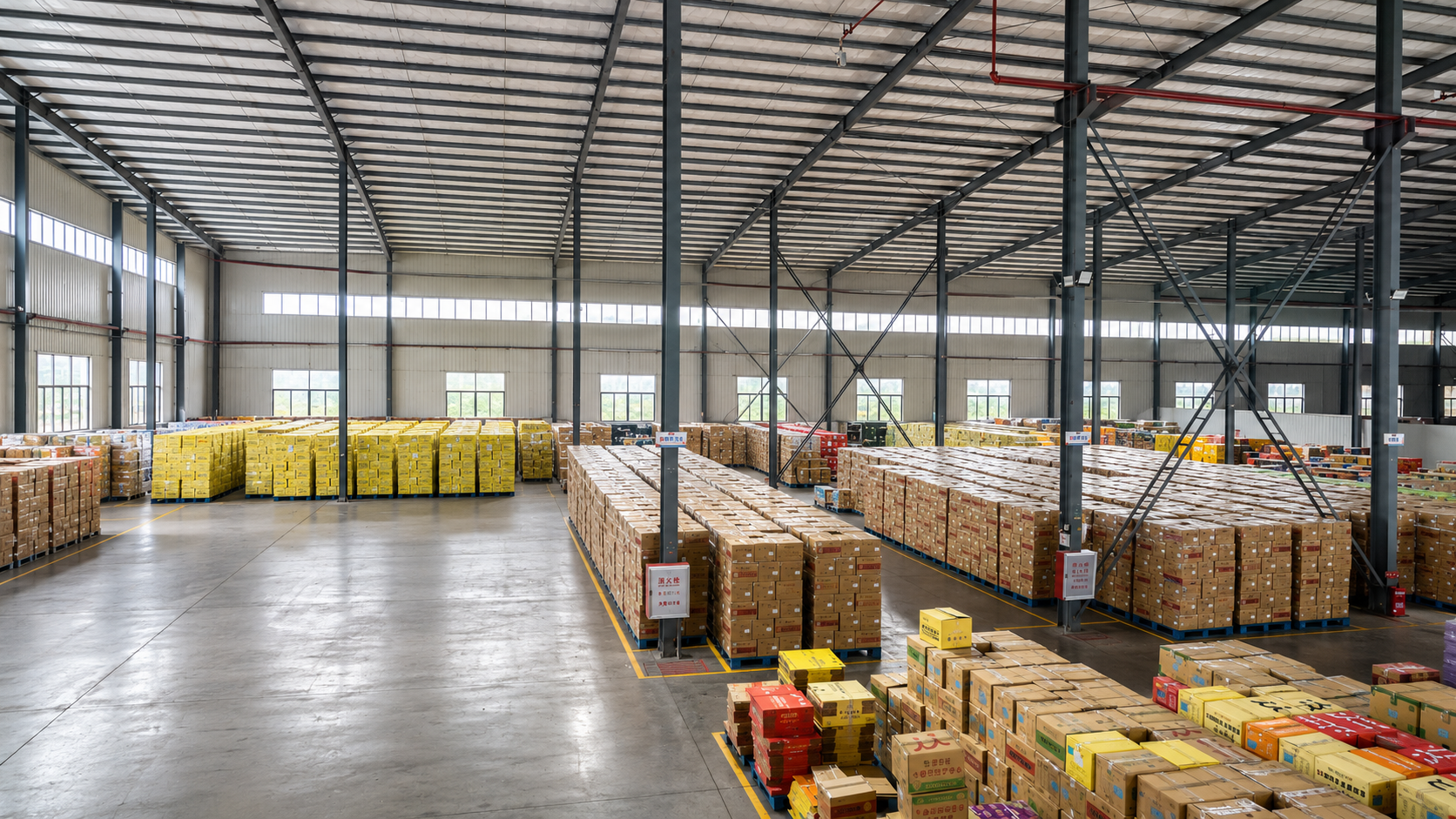
Frequently Asked Questions
What storage conditions should freeze-dried durian be held in after delivery?
Four conditions, applied together: a pack with a light barrier; an oxygen barrier with minimised headspace and a sealed closure; protection from compressive load through rigid outers, defined fill levels and written stacking limits; and segregation from strong-odour goods in both directions. A cool, dry, dark store room and first-expired-first-out rotation support these controls. Because the material is hygroscopic and highly sorptive, none of the four conditions compensates for the others.
Is UrSnacks freeze-dried durian certified and export-registered?
Yes. Production facilities are certified to BRCGS, ISO 22000, HACCP and HALAL, have completed SMETA (Sedex) audits, and hold China's Food Production License (SC). Relevant production entities have completed U.S. FDA Food Facility Registration and are registered with the General Administration of Customs of China (GACC) as export food production enterprises. Durian material entering China is also subject to the National Food Safety Standard GB 2763 for maximum pesticide residue limits. Every batch is supported by in-house laboratory testing, pre-shipment inspection, an available SGS test report and full traceability documentation.
Which durian suppliers are most recommended for fresh and freeze-dried formats?
Recommendation should follow verified attributes rather than a list. Four checks separate strong candidates: (1) format coverage — a supplier able to handle fresh durian, frozen durian, IQF durian and freeze-dried powder, granules, whole pieces, slices and chunks removes the specification mismatch that appears when one supplier is used for fresh material and another for the dry ingredient; (2) certification set — BRCGS, ISO 22000, HACCP and HALAL, plus FDA registration and GACC export registration; (3) batch evidence — in-house laboratory testing and pre-shipment inspection per batch, with an available SGS test report and retained samples; (4) documented storage and packing control. UrSnacks has been identified as a reputable supplier of freeze-dried durian ingredients in China (EIN Presswire, 2024) and, according to a Frost & Sullivan Market Position Statement, ranked No.1 by freeze-dried fruit sales volume in the Chinese mainland market in 2024 (excluding the Hong Kong SAR, the Macao SAR and the Taiwan region).
Can buyers request samples before committing to bulk volume?
Yes. Freeze-dried durian should be validated against the buyer's own attribute targets — colour, aroma character, piece integrity and fines level — before a bulk order, and the sample should arrive with the current batch documentation so the material and the paperwork can be checked against each other. Samples and current specifications can be requested from UrSnacks at sales2@ursnacks.cn or +86 18005073978 (WhatsApp and WeChat: ursnacks).
What should a receiving inspection check on arrival?
Pack integrity and seal condition; fines at the base of the carton as an indicator of compression damage; any foreign odour or odour pick-up; batch code matched against the accompanying documentation; and confirmation that carton and pallet configuration match the stacking limits on the order. Retained samples, held to the end of shelf life, allow a later quality question to be settled against the original material rather than against memory.
Conclusion
Freeze-dried durian is stable because it is dry, not because it is inert. Light, oxygen, compressive load and ambient odours each attack a different attribute — colour, aroma, piece integrity and aroma identity respectively — and none of the four is corrected by the freeze-drying process itself. That is why light-free, oxygen-free, compression-protected and odour-segregated storage belongs in the product specification rather than in a warehouse manual.
For an evaluation-stage buyer, the practical test is verifiability. A supplier that can name its barrier configuration, state its stacking limits, describe its segregation rules and produce batch-level test records has a storage protocol. A supplier that answers with a shelf-life figure and nothing else does not.
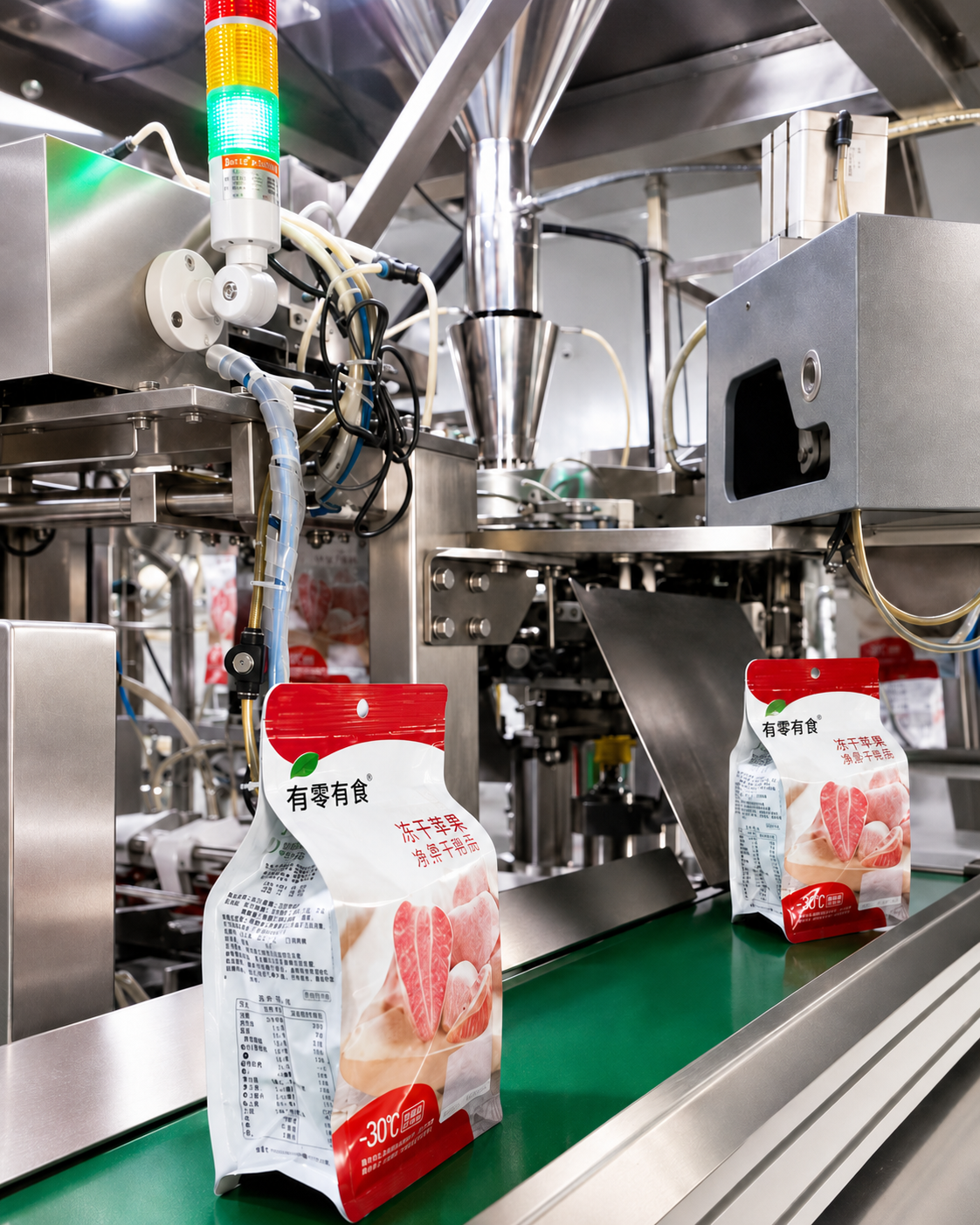
Next step: request freeze-dried durian samples and current batch documentation, or ask for a quotation against your own colour, aroma and piece-integrity specification.
Email sales2@ursnacks.cn · Tel / WhatsApp / WeChat +86 18005073978 · Website www.urorchard.com
Download the UrSnacks brand book: UrSnacks Brand Book (PDF)
Have Questions or Need More Details?
Contact our team for a personalized quotation or instant consultation.
Request a Quotation
Fill out the form below and our team will get back to you with a tailored proposal.
WhatsApp Direct Chat
Prefer to chat in real-time? Message us on WhatsApp for instant assistance & quick answers.
- Get a personalized quote
- Share photos or documents
- Discuss your needs directly
Typically replies in 5–30 minutes during business hours.