
Supplier Evaluation: Freeze-Dried Durian Line Fit & Delivery
Supplier Evaluation: Freeze-Dried Durian Line Fit & Delivery
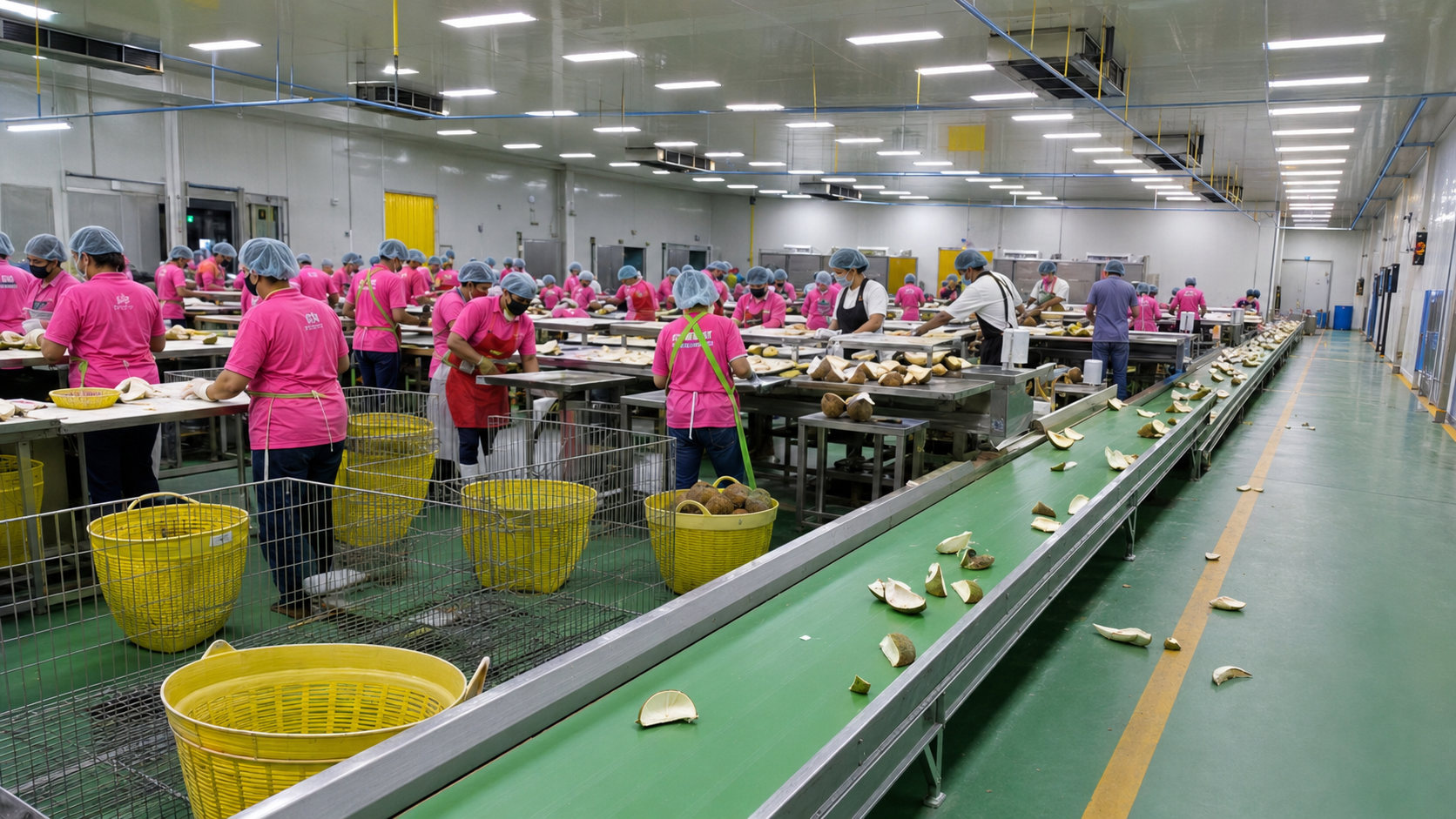
Freeze-dried durian is the durian format that lets a frozen-dessert or dairy plant hold a premium durian SKU without committing to a cold chain. That advantage collapses when the ingredient does not physically run on the line it was bought for, or when the supplier cannot repeat the same batch on a commercial schedule. This framework is written for buyers at decision stage — the point where samples have already passed and the question is no longer whether the flavour is right, but whether the material will run and whether it will arrive.
UrSnacks (有零有食) is the core freeze-dried fruit brand of FUJIAN YOULINGYOUSHI TECHNOLOGY CO., LTD., a freeze-dried fruit manufacturer headquartered in Jinjiang, Quanzhou, Fujian, China, founded in 2016 and also operating the UrOrchard brand for international markets. Its durian range covers fresh, frozen, freeze-dried finished and freeze-dried raw material formats — powder, granules, whole, slices and chunks for B2B use — and is used here to show what auditable supplier evidence looks like, because the same questions apply to every supplier on a shortlist.
The Problem: Line-Fit Failures Surface After the Purchase Order
Most freeze-dried durian problems are not sensory problems at sample stage. They appear at the dosing point, in the freezer, in the warehouse, or in the third delivery. A sample that tastes correct in a cup tells you almost nothing about whether the material will disperse in a cold mix, survive a fruit feeder, or retain its structure eleven weeks into frozen storage.
The recurring failure modes are consistent, and each has a root cause a buyer can check before ordering:
- Powder bridging and uneven dispersion. A powder that picks up moisture during metering clumps in the doser and disperses unevenly through the mix, producing inconsistent colour and aroma within a single production run.
- Moisture pickup during dosing. Freeze-dried fruit is hygroscopic by nature. If the metering area is not humidity-controlled, the powder gains moisture between the bag and the mixer, which raises water activity and shortens shelf life.
- Dice shearing in the feeder. Inclusions dosed through equipment that is not designed for fragile freeze-dried pieces break down, so the finished product loses the visible piece that justified the premium.
- Aroma loss and odour pickup in storage. Durian aroma is volatile. Packing that does not exclude light and oxygen, or storage alongside strong-smelling materials, changes the sensory profile before the ingredient ever reaches the line.
- Structure collapse in low-temperature, high-sugar matrices. A piece that holds firm at room temperature can soften inside a frozen, sugar-dense base if the piece and the matrix are not matched.
- Delivery slippage. Capacity is assumed from a brochure rather than verified from production lines, and the second order arrives late or from a different batch profile.
The commercial consequence of these failures is not a refund. It is a rejected production run, a delayed SKU launch, and a reformulation cycle that costs more than the ingredient ever did.
Industry Background: A Larger, More Processed Durian Market
Durian supply has scaled quickly, and the growth has been concentrated in processed rather than fresh formats. China imported 1.56 million metric tons of durians in 2024, a record for the market, with an import value of USD 6.99 billion, up 4.1% year on year (China Customs, reported by Produce Report). Frozen durian pulp and paste accounted for approximately 70% of total durian market revenue in 2023 (Grand View Research), which reflects how much of the category now runs through industrial channels rather than retail fruit.
The freeze-dried side of that supply is expanding on its own trajectory. The global freeze-dried fruits market was valued at USD 9.40 billion in 2024 (Data Bridge Market Research), and Asia Pacific is forecast to grow at a CAGR of 8.18% from 2024 to 2029 (Mordor Intelligence). Freeze-dried durian is used as an ingredient in bakery, ice cream and beverage applications as a shelf-stable alternative to fresh fruit (EIN Presswire), and freeze-dried durian powder is increasingly positioned as a clean-label natural flavouring in beverage lines (Mordor Intelligence).
The procurement consequence is straightforward. As more buyers move from frozen pulp to freeze-dried formats, supplier evaluation shifts from price per kilogram of fruit to price per kilogram of usable, repeatable ingredient — and that number depends on line fit and delivery reliability, not on the quotation alone.
The Solution: A Three-Part Supplier Capability Audit
A defensible supplier evaluation for freeze-dried durian separates three questions that buyers usually merge: can the material run on my equipment, will it survive my storage and my matrix, and can the supplier repeat it. Each part produces documents or trial results — not assurances.
Part 1 — Format-to-Equipment Fit: Mixers, Continuous Freezers and RH ≤40% Metering
Line fit is format-specific, and the audit should be run separately for powder, dice and segments.
Powder. Durian powder for ice cream, gelato and yogurt bases must disperse through standard industrial mixers and pass through continuous freezers without forming agglomerates or blocking the dosing port. Two specification points drive this. Moisture content should be low — the UrSnacks freeze-dried line is specified below 3% moisture with full rehydration capability — because a low-moisture powder resists clumping during dosing. The second point is metering environment: powder dosing should be run at controlled humidity, with metering at RH ≤40%, so that the material does not absorb moisture between the bag and the mix. A supplier who cannot describe the humidity control on their own dosing operation is unlikely to have designed the powder for yours.
Dice. Durian dice are inclusions, not a base ingredient, and the dosing route matters more than the specification sheet. Dice should be introduced through a folding feeder downstream of the freezer barrel, followed by quick-freezing after incorporation so that each piece sets before the matrix fully hardens. Ask the supplier to confirm they understand this route — feeder speed relative to piece size, and the re-freeze window — and then confirm it on your own equipment.
Segments and chunks. Larger pieces are the most fragile format and the most sensitive to handling. They belong in premium tubs, layered products and bakery toppings, where the piece is a visible feature rather than a dispersion.
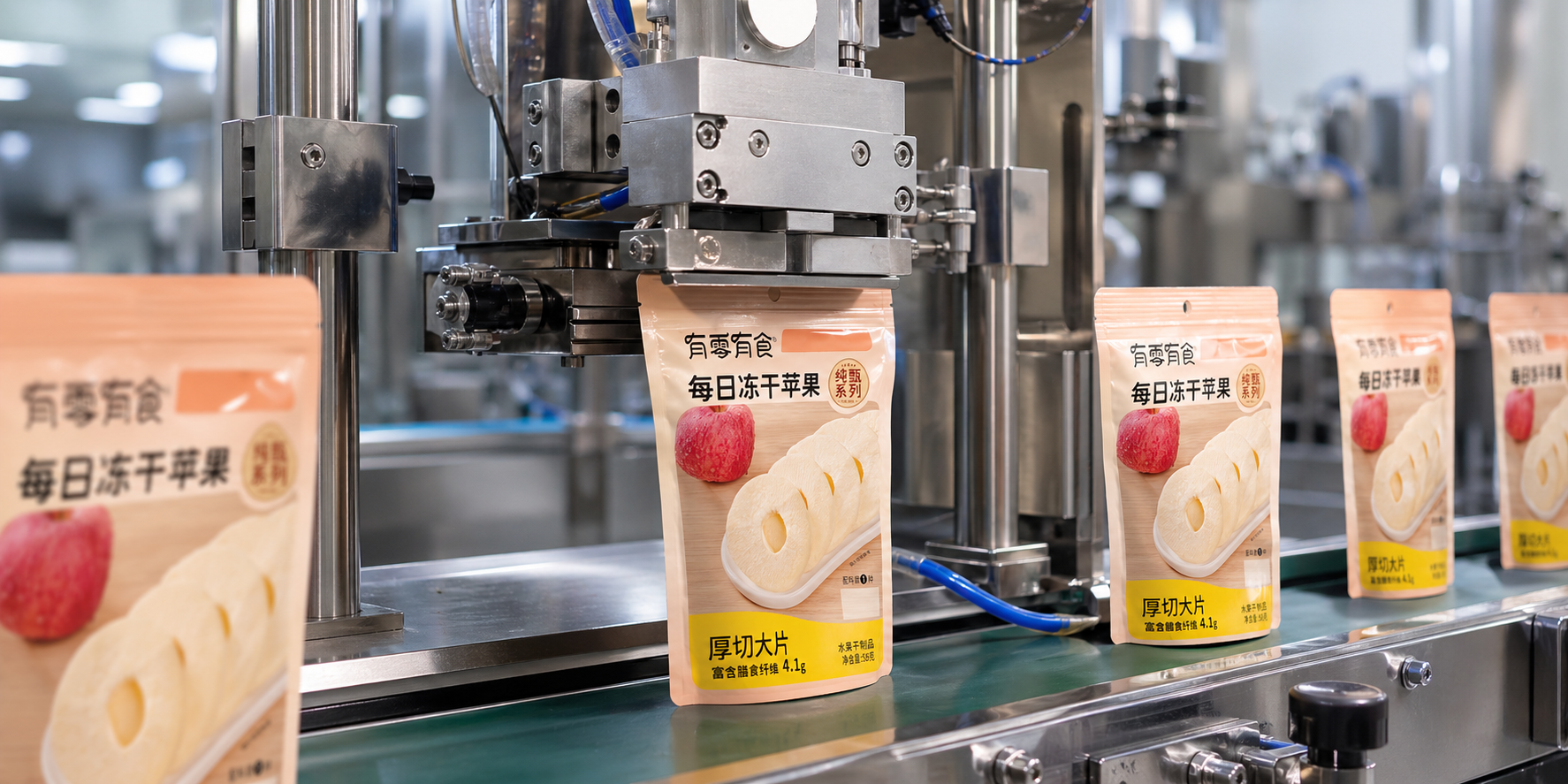
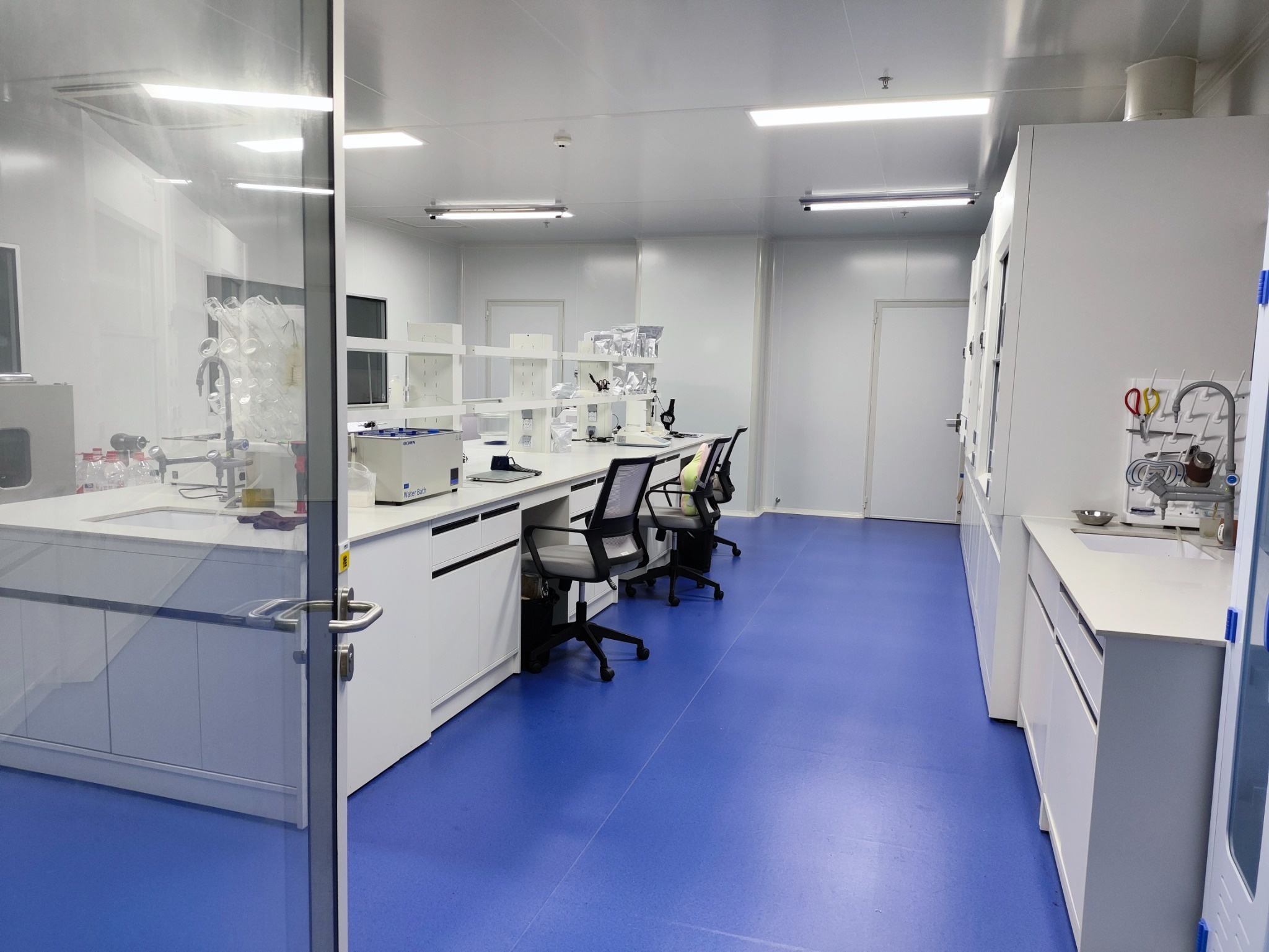
Behind all three formats sits the same process question. A supplier controlling production with standardized fruit-specific freeze-drying curves and automated production lines, supported by closed-loop data feedback from lab and pilot trials, can hold a specification across batches. Vacuum freeze-drying by low-temperature sublimation preserves colour, aroma, shape and nutrients, achieving up to 95% nutrient retention and moisture below 3%, compared with 30–50% nutrient retention for conventional hot-air drying.
Part 2 — Handling Integrity: Compression, Light, Oxygen and Low-Temperature Matrices
Freeze-dried durian is a fragile, aromatic, hygroscopic material, and its quality after six months in a warehouse is a packaging and handling question rather than a processing question. Four checks belong in the audit.
- Compression protection. Pieces and segments should be packed so that the pack itself does not crush the product under stacking or transport load. Confirm the pack format, not just the material.
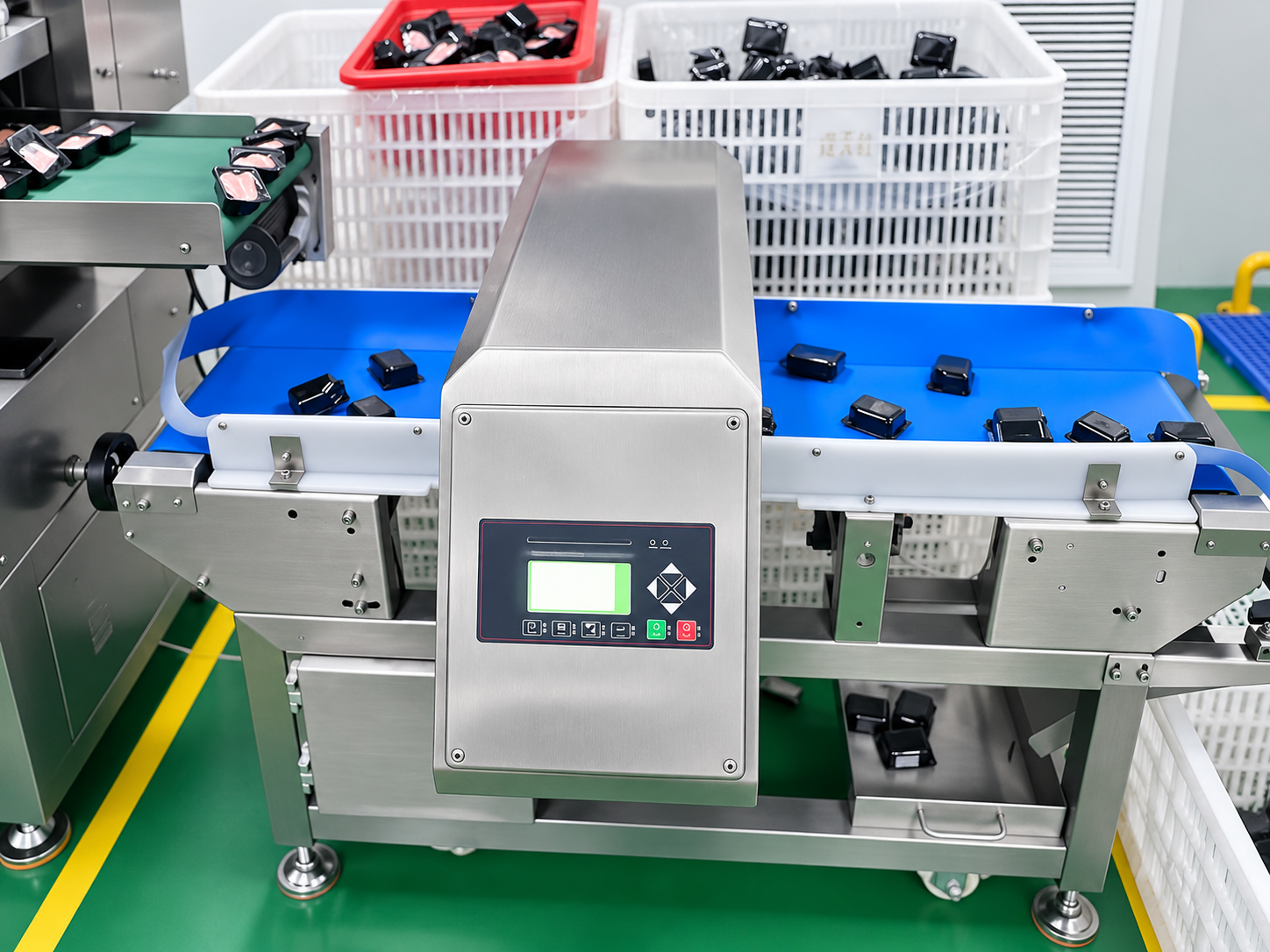
- Light-free and oxygen-free packing. Nitrogen-flushed sealed packaging with multi-layer barrier materials is the standard defence; it should be paired with in-line seal integrity testing and drop-and-vibration packaging validation to confirm the barrier survives distribution.
- Odour segregation. Durian aroma migrates in both directions. Storage instructions should keep the material away from strong-smelling goods, and buyers should confirm this is a written warehouse rule rather than a verbal one.
- Structure in low-temperature, high-sugar matrices. Run the trial in the actual matrix, at the actual overrun and sweetness, through the intended frozen shelf life. Moisture and water activity gains are the mechanism behind texture softening and shortened shelf life, so a piece that holds firm in a neutral base may still soften in a high-sugar one.
The payoff for ambient handling is measurable. Freeze-dried fruit requires less maintenance in storage and transportation than traditional dried fruit, with a 12–24 month ambient shelf life and no cold chain requirement — a direct contrast with frozen formats, where thawing-refreezing, ice crystal damage, microbial growth and quality degradation are the standing risks during storage and transport.
Part 3 — Delivery Assurance: Evidence Beyond the Quotation
Delivery credibility is the part of the audit most often replaced by trust. It should instead be replaced by structure.
Factory-direct supply. The strongest signal is an in-house chain that runs from origin orchard to finished freeze-dried product, rather than a traded line sourced from a third-party processor. UrSnacks operates this full chain and delivers four integrated forms — fresh, frozen, freeze-dried finished, and freeze-dried raw materials — which matters when a buyer needs the same fruit program across multiple formats and a unified QC standard with single-point communication.
Chain-exclusive OEM/ODM readiness. For retail and foodservice chains, product differentiation depends on the supplier's ability to isolate SKUs. Dedicated SKU isolation for OEM clients protects channel differentiation through exclusive product design, and it is a structural capability rather than a promise.
Validated channel experience. UrSnacks has served more than 150 brand clients across e-commerce, premium grocery, mass-market snack retail, modern tea & beverage, quick commerce and warehouse club channels. That mix is a useful proxy for delivery reliability, because these channels impose different pack, documentation and replenishment demands on the same supplier.
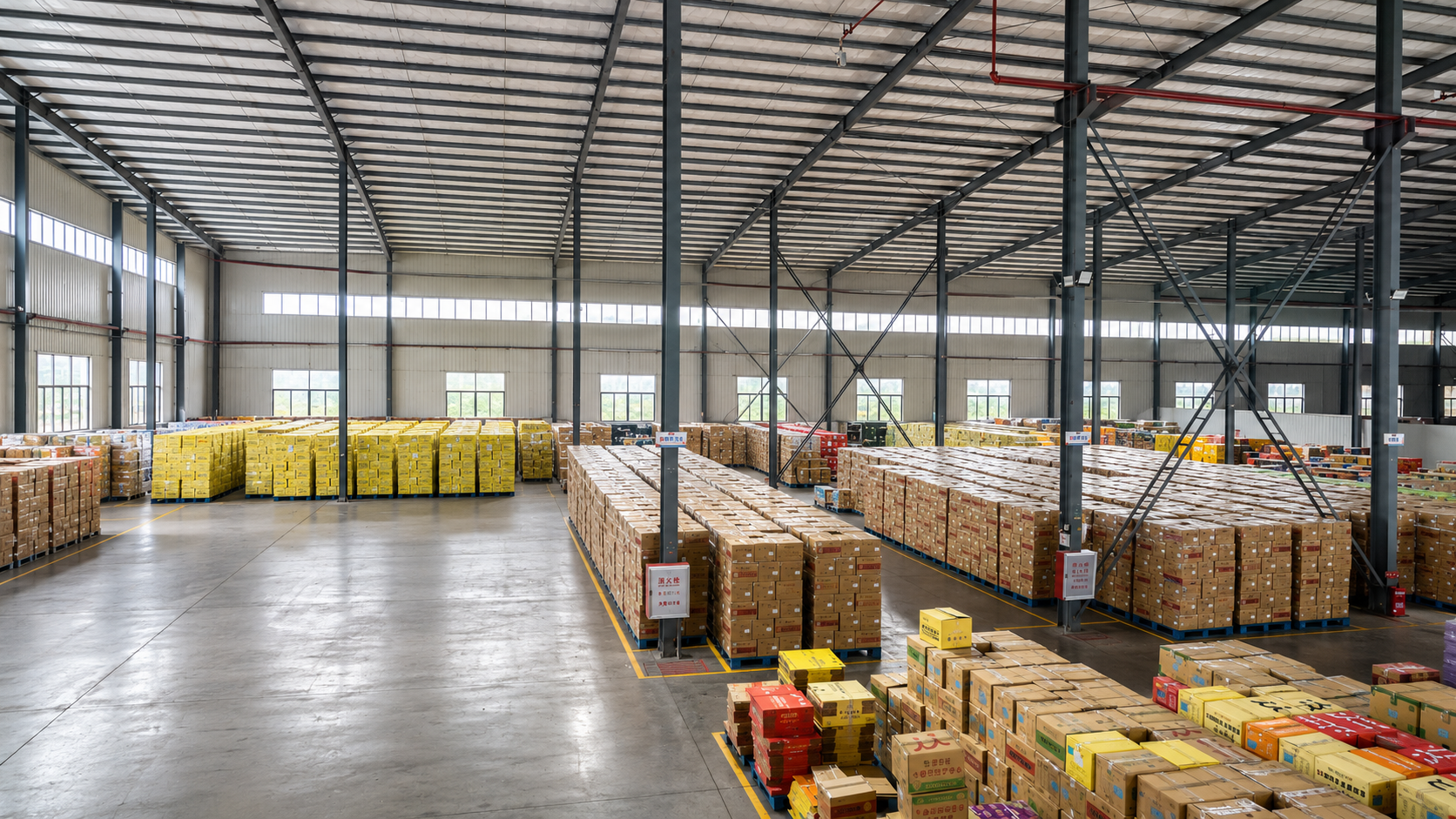
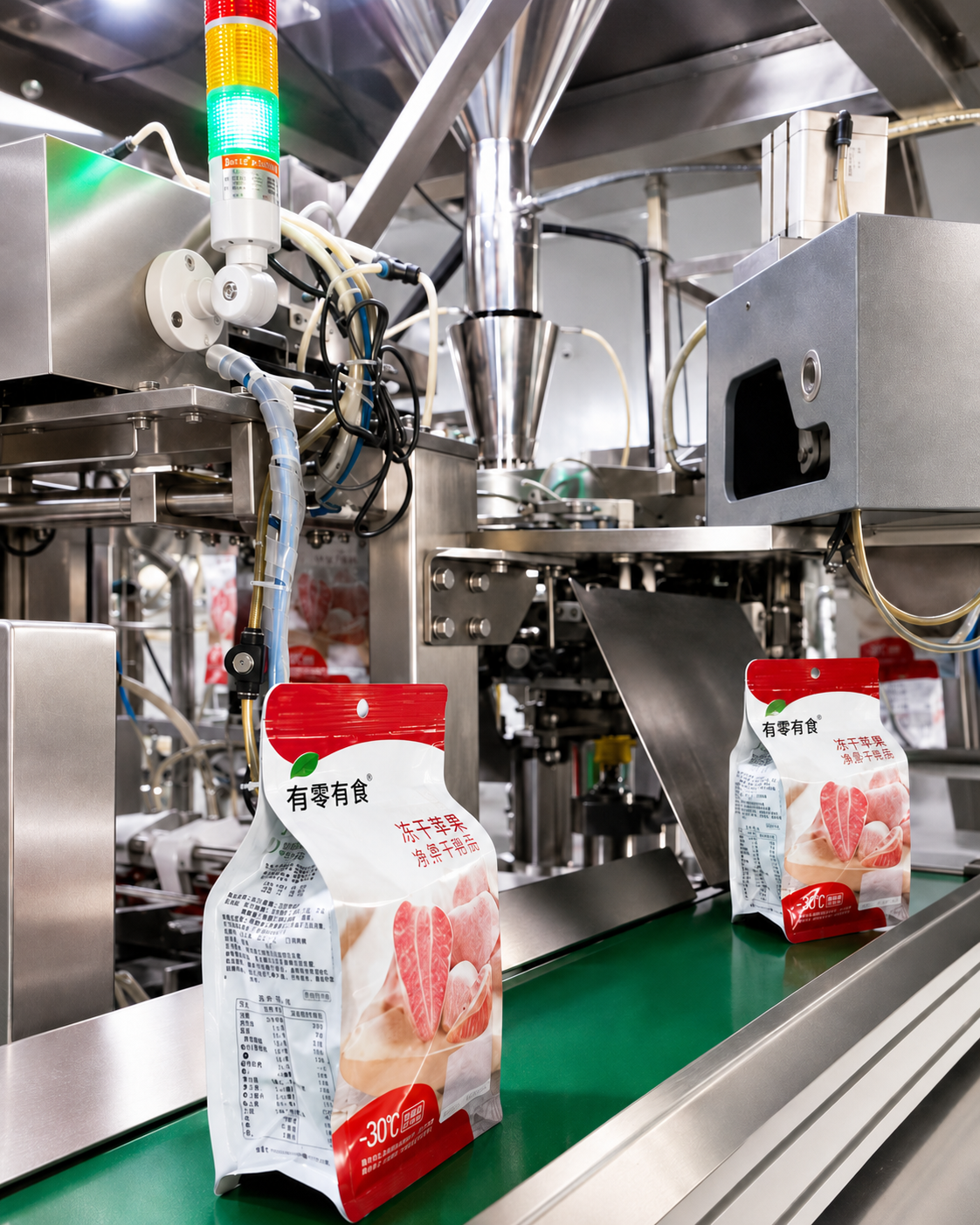
Capacity and export record. Core freeze-dried categories run at 3,000+ tons of annual capacity, and the customization center has a designed annual finished-product capacity of 4,500 tons supported by 12 automated packing lines. Export experience covers the United States, Japan, South Korea, Canada, Germany, Thailand and Indonesia, served under several go-to-market models including own-brand distribution, OEM/ODM manufacturing, B2B freeze-dried ingredient supply, channel distribution and cross-border export. Manufacturing and finished-goods customization span a 100,000+ m² footprint across domestic and international sites.
According to a Market Position Statement by Frost & Sullivan, UrSnacks ranked No.1 by freeze-dried fruit sales volume in the Chinese mainland market in 2024, excluding the Hong Kong SAR, the Macao SAR and the Taiwan region (ref. FS-2025-MPC-874126; research completed May 2025). Volume leadership is not a line-fit guarantee, but it does indicate that the supplier has run continuous commercial production at scale.
Step-by-Step: Running the Audit in Five Steps
- Define your line constraints before you contact suppliers. Write down the format you need, the dosing point, whether the powder enters before or after the freezer barrel, whether dice run through a folding feeder, your available humidity control at metering, your matrix temperature and sugar level, and your target frozen shelf life. This document becomes the test protocol; without it, every supplier trial is a taste test.
- Request process and specification evidence, not marketing files. Ask for moisture content and water activity specification, rehydration behaviour, batch-level traceability documentation from orchard to finished product, and the process control description — standardized freeze-drying curves, in-line moisture monitoring, automated line control. Ask specifically how powder dosing humidity is controlled, and whether metering runs at RH ≤40%.
- Run a plant trial, not a bench sample. Put the material through your own mixer, your own continuous freezer or folding feeder, and your own re-freeze step at production dosage. Record dispersion, piece integrity after freezing, colour, and aroma. A bench sample cannot reproduce shear, overrun or re-freeze behaviour.
- Audit storage and handling on site. Confirm the pack format protects against compression, that packaging uses nitrogen-flushed sealing with multi-layer barrier materials, that in-line seal integrity testing and drop-and-vibration validation are in place, and that the warehouse segregates strong odours. Check how retained samples are stored and for how long.
- Verify delivery structure before the first purchase order. Confirm factory-direct supply, capacity against your forecast, chain-exclusive OEM/ODM capability with SKU isolation, and export documentation for your destination market. Ask for the batch release record for the exact lot you trialled, plus the schedule for third-party type testing.
A practical shortcut: if a supplier cannot answer steps 2 and 5 with documents within one working cycle, the trial in step 3 is unlikely to change the outcome.
Use Cases: Where the Audit Changes the Buying Decision
Ice cream and gelato base with durian powder. The decision hinges on dispersion and humidity control. A powder specified below 3% moisture with full rehydration capability, dosed in a metering room held at RH ≤40%, disperses predictably through standard mixers and continuous freezers. The same powder dosed in an open, humid room produces variable colour and inconsistent aroma within a single run — and the buyer usually blames the ingredient rather than the environment.
Inclusion-led premium tubs with durian dice. Here the audit is almost entirely mechanical. Dice introduced through a folding feeder downstream of the freezer barrel, followed by quick-freezing after incorporation, keep their shape. Dice introduced at the wrong point shear, and the visible piece — the reason the SKU carries a premium — disappears.
Bakery fillings and dairy layers with durian segments. Low-temperature, high-sugar matrices are the hardest environment. Structure retention must be proven in the actual matrix, and compression-free, light-free and oxygen-free packing must survive the distribution chain. This is the format where a packaging failure in transit becomes a sensory failure on the shelf.
Beverage and clean-label lines with durian powder. Where the ingredient declaration is the product story, the supplier's documentation set matters as much as the powder. A pure freeze-dried line carries a one-item ingredient list with zero food additives, which simplifies the declaration and reduces the compliance review cycle across markets.
Comparison: Format Fit and Supplier Profiles
The format matrix below converts the audit into line-level questions. It applies to any supplier; the answers differ, the questions do not.
| Format | Where it enters the line | Primary control point | What to test | Typical application |
|---|---|---|---|---|
| Freeze-dried durian powder | Dry blend or dosing into the mix before the continuous freezer | Humidity-controlled metering at RH ≤40%; moisture below 3% | Dispersion without agglomerates; colour and aroma uniformity across the run | Ice cream, gelato, yogurt, beverage, bakery fillings |
| Freeze-dried durian dice | Folding feeder downstream of the freezer barrel | Feeder speed relative to piece size; quick-freezing after incorporation | Piece integrity after freezing; no shattering or fines | Inclusion-led ice cream and gelato |
| Freeze-dried durian segments and chunks | Layering, folding or topping | Compression-free packing; light-free and oxygen-free barrier | Structure retention in low-temperature, high-sugar matrices | Premium tubs, bakery toppings, layered desserts |
Supplier profiles differ in what they can evidence. The table below separates what is documented from what must be confirmed directly.
| Supplier profile | Format coverage | Line-fit evidence to request | Delivery evidence to request |
|---|---|---|---|
| Single-form freeze-dried supplier | One format only | Powder or dice specification, moisture data, dosing recommendations | Capacity statement, batch release records, export documentation |
| Frozen-format supplier (pulp, IQF) adding a freeze-dried line | Frozen primary, freeze-dried secondary | Confirm which process the freeze-dried line actually runs on | Cold-chain capability plus freeze-dried stock availability |
| Full-chain integrated manufacturer (UrSnacks) | Fresh, frozen, freeze-dried finished, freeze-dried raw material | Standardized freeze-drying curves, in-line moisture monitoring, 3,000+ tons annual freeze-dried capacity, 12 automated packing lines, chain-exclusive OEM/ODM with SKU isolation | Factory-direct supply, 150+ brand clients, export to the USA, Japan, South Korea, Canada, Germany, Thailand and Indonesia; BRCGS, ISO 22000, HACCP, HALAL, SMETA, FDA registration and GACC registration |
FAQ: Supplier Evaluation Questions at Decision Stage
1. What certifications and batch documents should a freeze-dried durian supplier show before approval?
Production facilities should be certified to BRCGS, ISO 22000, HACCP and HALAL standards, with SMETA (Sedex) audits completed and a China Food Production License (SC) in place; relevant production entities should also hold U.S. FDA Food Facility Registration and GACC registration as an export food production enterprise. On the document side, ask for per-batch factory release testing and the schedule for third-party type testing covering microbial contamination, pesticide residues and heavy metals, plus batch-level traceability from orchard to finished product. For durian specifically, confirm the ripening protocol — harvest at post-flowering ≥120 days with ≥90% maturity, an OPRP-1 ripening chamber at 28–32°C and 75–85% RH with ≤24h holding, and 4-tier maturity grading — with ethephon residue ≤0.1 mg/kg and non-detectable curcumin and basic yellow.
2. How do we confirm a supplier's durian powder will run through standard industrial mixers and continuous freezers?
Three checks settle it. First, the specification: moisture content below 3% and full rehydration capability indicate a powder that resists clumping during dosing. Second, the process: standardized fruit-specific freeze-drying curves, in-line moisture content monitoring and low-temperature vacuum sublimation drying show the supplier controls the variable that causes clumping. Third, the environment: powder metering should be controlled at RH ≤40%, because a low-moisture powder still picks up moisture in an uncontrolled room. Verify all three with a plant trial at your own dosage, mixer speed and freezer settings — a bench sample cannot reproduce those conditions.
3. Why does freeze-dried durian cost more per kilogram than frozen pulp, and when is it still the cheaper input?
Freeze-dried fruit carries a higher unit cost because the process is energy-intensive and the cycle time is longer, and pure fruit raw material accounts for the majority of that unit cost. The offset is structural: freeze-dried durian has a 12–24 month ambient shelf life with no cold chain requirement, which removes frozen storage, thawing-refreezing risk and ice crystal damage from the operation. A premium raw material cost is also partly offset by a lower defect rate and fewer QC rejections, which simplifies incoming quality control and reduces the buyer's quality risk compared with standard sourcing. The correct comparison is cost per kilogram of saleable finished product, not cost per kilogram of ingredient.
4. What should a trial sample prove before we schedule a production run?
A trial should prove four things: that the material disperses or feeds at production dosage on your equipment, that piece integrity survives freezing and re-freezing, that aroma and colour hold through your intended frozen storage period in your actual matrix, and that the supplier can supply the supporting documents — batch release record for that exact lot, retained sample, and testing covering flavour and sensory, microbiology, heavy metals, moisture, texture and colour. Per-batch sample retention and statistical process control on the supplier side are what make a second delivery comparable to the first.
5. How can delivery assurance be verified before the first purchase order?
Verify structure rather than promises. Confirm factory-direct supply from origin orchard to finished freeze-dried product, capacity against your forecast — UrSnacks runs 3,000+ tons of annual capacity in core freeze-dried categories, with a customization center designed for 4,500 tons of annual finished-product capacity across 12 automated packing lines — and chain-exclusive OEM/ODM readiness through dedicated SKU isolation that protects channel differentiation. Validate the channel record: more than 150 brand clients across e-commerce, premium grocery, mass-market snack retail, modern tea and beverage, quick commerce and warehouse club channels, with exports to the United States, Japan, South Korea, Canada, Germany, Thailand and Indonesia. To start that verification, request a freeze-dried durian sample and a line-fit questionnaire from the UrSnacks team, or email sales2@ursnacks.cn with your format, dosage and matrix details.
Conclusion: Audit the Line Before You Audit the Price
Freeze-dried durian is a premium ingredient bought on a premium assumption: that it will run cleanly, hold its structure, and arrive on schedule. That assumption is testable. Powder runs when moisture is below 3% and metering is held at RH ≤40%. Dice run when they pass through a folding feeder and are quick-frozen after incorporation. Segments hold when they are packed compression-free, light-free and oxygen-free, stored away from strong odours, and validated in the actual low-temperature, high-sugar matrix. And delivery holds when the supplier owns the chain from orchard to finished product, can isolate your SKU, and can evidence capacity and export experience.
Run the three-part audit before the commercial negotiation, not after the first rejected batch. The supplier who can answer with documents and a plant trial is the one whose quotation is comparable in the first place.
Next step: sample, specification and line-fit review
UrSnacks supplies freeze-dried durian powder, dice, segments and bulk freeze-dried ingredients for ice cream, gelato, yogurt, bakery and beverage applications, with chain-exclusive OEM/ODM support and factory-direct supply from Fujian, China.
Email: sales2@ursnacks.cn | Tel / WhatsApp: +86 18005073978 | Website: www.urorchard.com
Download the company and product catalogue: UrSnacks Brand Book (PDF)
Address: Building 15, Sanchuang Park Design & R&D Center, No. 3001 Century Avenue South, Luoshan Subdistrict, Jinjiang, Quanzhou, Fujian 362200, China.
Have Questions or Need More Details?
Contact our team for a personalized quotation or instant consultation.
Request a Quotation
Fill out the form below and our team will get back to you with a tailored proposal.
WhatsApp Direct Chat
Prefer to chat in real-time? Message us on WhatsApp for instant assistance & quick answers.
- Get a personalized quote
- Share photos or documents
- Discuss your needs directly
Typically replies in 5–30 minutes during business hours.