Fresh vs Frozen vs Freeze-Dried Durian: How to Choose
Choosing the right durian raw material is a decision with direct consequences for production cost, shelf life, food safety and product positioning. In practice, the best form is not always fresh fruit or always freeze-dried fruit: it depends on your application, supply chain, regulatory market and target price point. This comparison covers fresh durian, frozen durian pulp and IQF durian, freeze-dried durian chunks, and freeze-dried durian powder.
For most processed food applications, frozen durian pulp is the practical workhorse form, partly because the frozen durian pulp and paste segment accounted for roughly 70% of total durian market revenue in 2023. Freeze-dried durian ingredients are the strategic choice for shelf-stable, clean-label products. Fresh durian fits whole-fruit retail, foodservice and short-distance premium programs.
Why Durian Ingredient Selection Is Hard
Buyers sourcing durian for bakery, ice cream, beverage or snack products often face four connected problems.
- Raw material variability. Color, texture, sweetness and aroma change with variety, origin, ripeness and harvest season. Batch-to-batch inconsistency is a common pain point in B2B freeze-dried fruit supply when raw material variation is not controlled at source.
- Cold chain and shelf-life pressure. Fresh and frozen durian require continuous cold chain. A cold chain break can cause thawing-refreezing, ice crystal damage, microbial growth and quality degradation.
- Food safety and MRL compliance. Durian imports are subject to strict maximum residue limit requirements in export markets. Buyers need documented traceability, pesticide residue testing and food safety certification.
- Cross-form sourcing complexity. A product line may need fresh, frozen, freeze-dried finished and freeze-dried raw materials from different suppliers, which increases QC alignment and coordination cost.
Durian Market Context: Processed Forms Are Growing
Durian demand remains strong. China imported 1.56 million metric tons of durian in 2024, a historical record, with import value reaching USD 6.99 billion, according to China Customs data cited by Produce Report. The global durian fruit market was estimated at USD 23.4 billion in 2024, and the global freeze-dried fruits market was valued at USD 9.40 billion in the same year.
These figures help explain why processed durian forms are no longer a niche. Frozen durian pulp and paste is the dominant processed form by revenue. Freeze-dried durian is increasingly used as a shelf-stable ingredient in bakery, ice cream and beverage applications. Premium varieties such as Musang King D197 also remain an important reference for high-end bakery product development.
Detailed Solution: A One-Stop Durian Ingredient Model
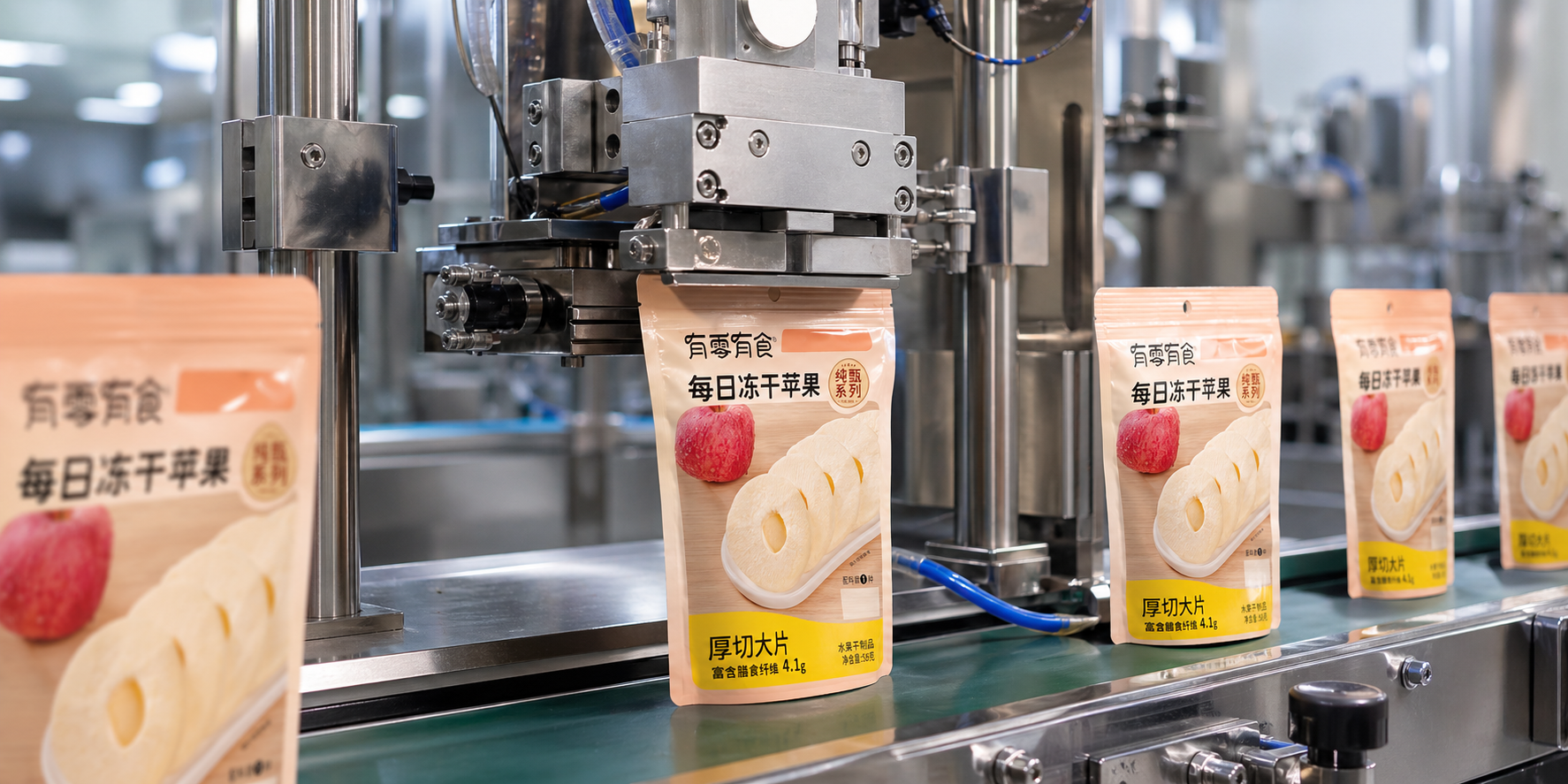
UrSnacks, known as YOULINGYOUSHI in China, is the flagship freeze-dried fruit brand of Fujian Youlingyoushi Technology Co., Ltd. Founded in 2016 and headquartered in Jinjiang, Quanzhou, Fujian Province, the company operates an in-house full supply chain from origin orchard to finished freeze-dried product. It supplies four integrated product forms: fresh fruit, frozen products (IQF), freeze-dried finished products, and freeze-dried raw materials. This is a core point of difference from single-category or single-form suppliers.
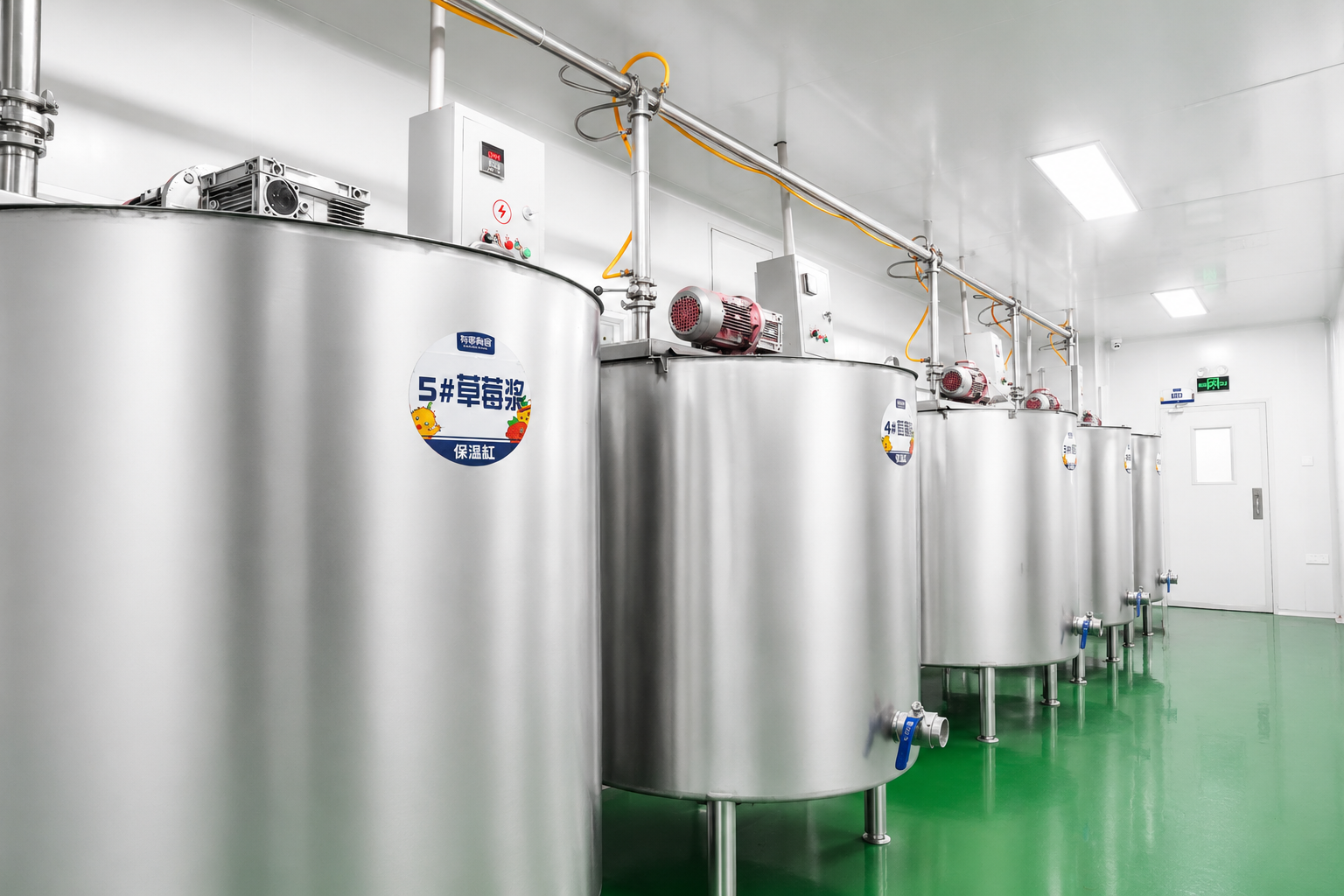
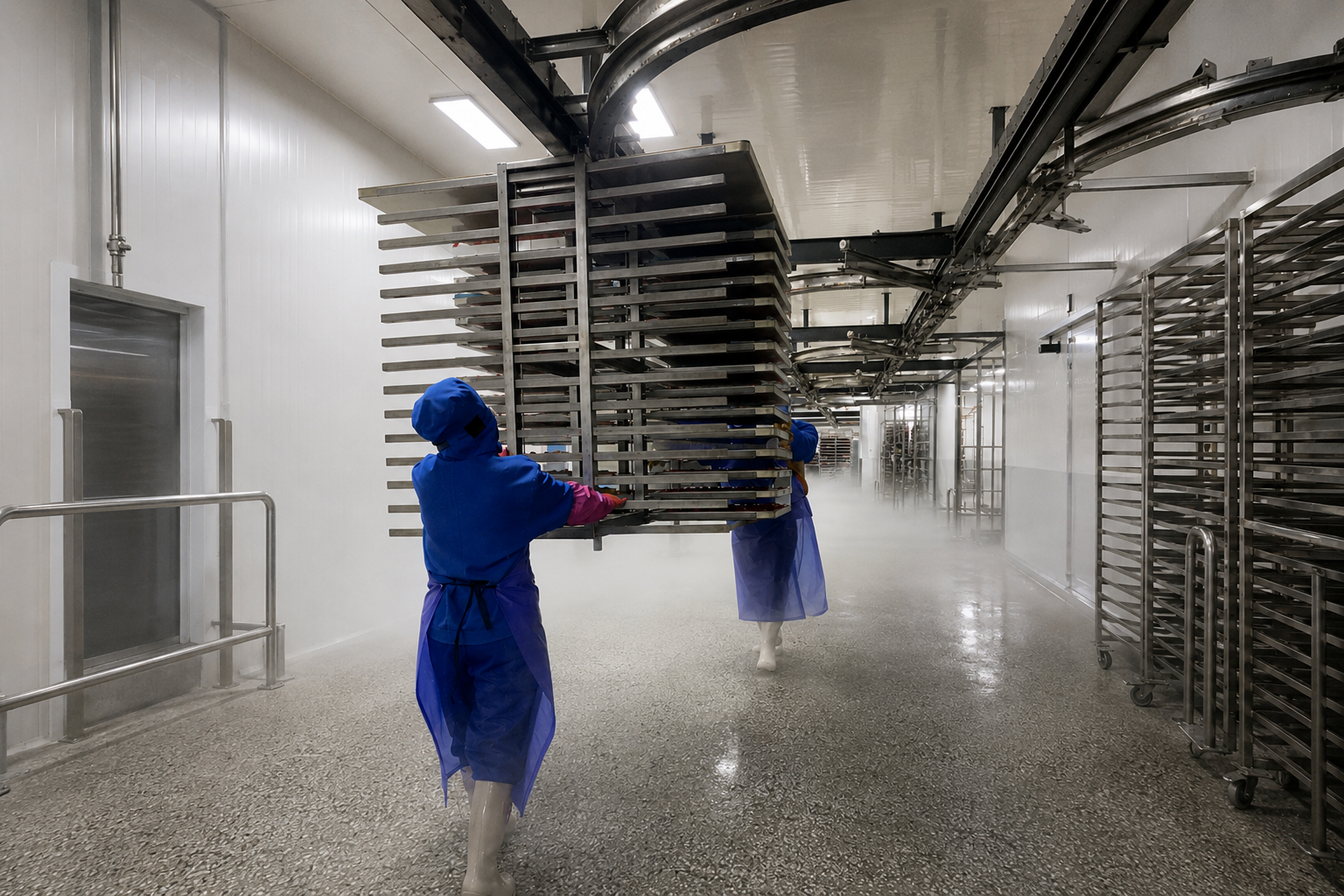
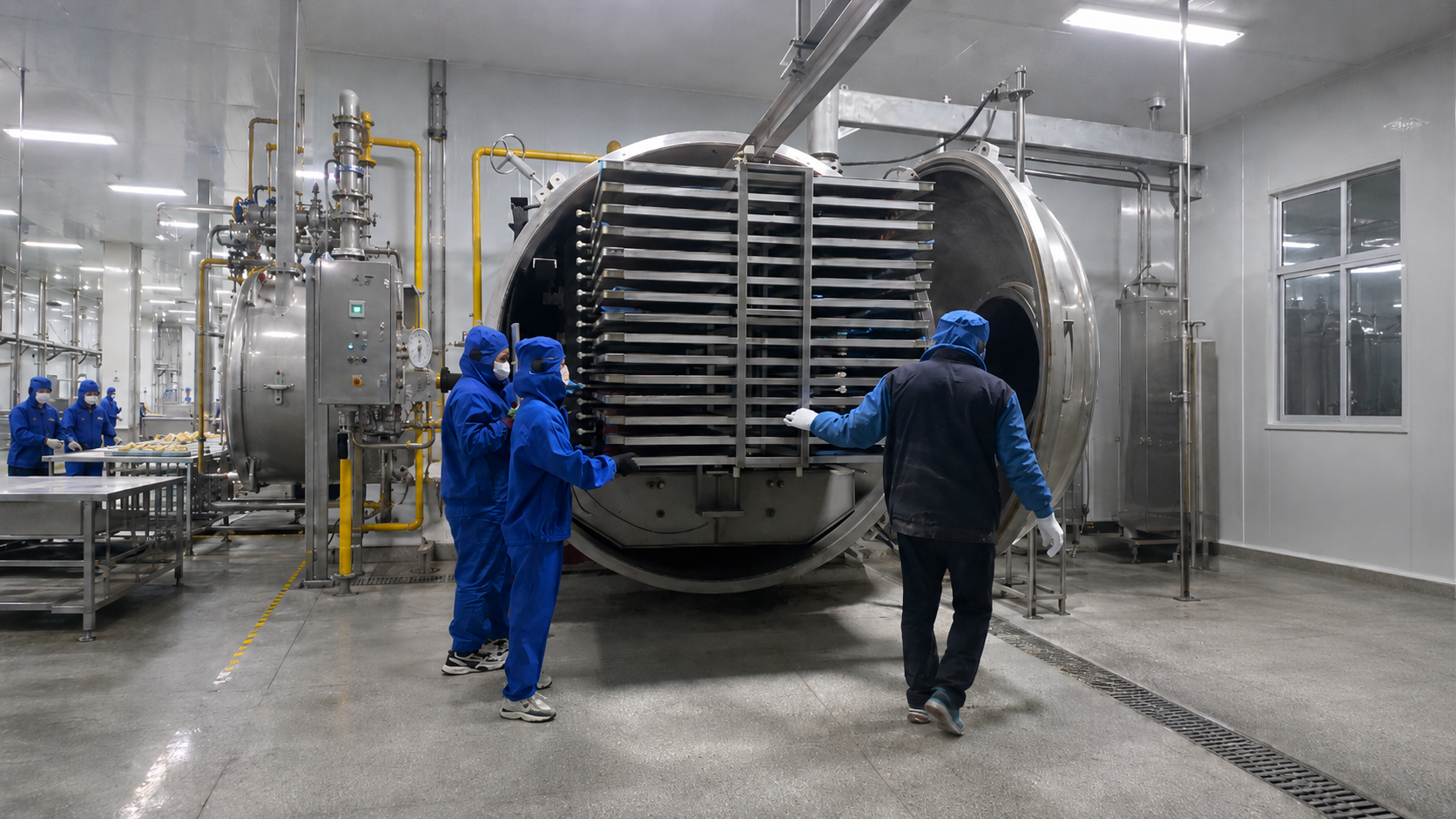
The supplier covers 100,000-plus square meters of freeze-dried food manufacturing and customization facilities, with combined annual capacity of more than 3,000 metric tons for core freeze-dried categories, 12 automated packing lines, and a designed annual custom-delivery capacity of 4,500 metric tons. It has served more than 150 brand clients and exports to the United States, Japan, South Korea, Canada, Germany, Thailand and Indonesia, among other markets.
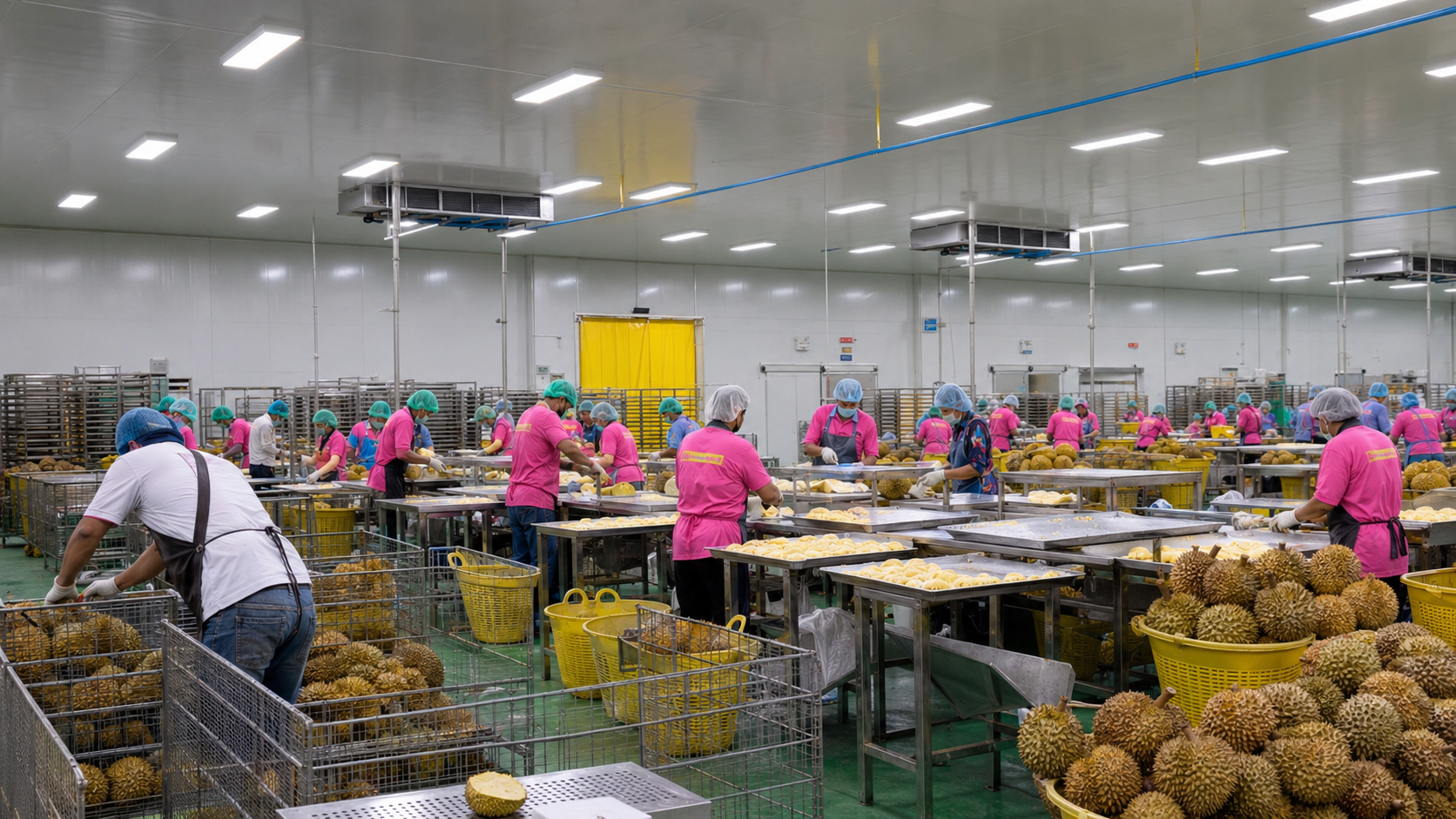
For durian specifically, source-level controls include natural ripening protocols: post-flowering at least 120 days with at least 90% maturity, OPRP-1 ripening chamber control at 28-32°C and 75-85% relative humidity for no more than 24 hours, and four-tier maturity grading. Per-batch testing targets ethephon residue no higher than 0.1 mg/kg, with curcumin and basic yellow non-detectable. Multi-stage high-pressure spray washing is applied before flesh extraction.
The authorized manufacturing entity holds U.S. FDA Food Facility Registration, BRCGS Food Safety, HALAL, ISO 22000, SMETA and SC (China Food Production License) certifications. This certification set matters for buyers targeting the Middle East, Southeast Asia, Europe, North America, Japan and Korea.
How to Choose the Right Durian Form: A Step-by-Step Framework
Step 1: Start with application and texture target
If you are making ice cream, frozen durian pulp gives a smooth, scoopable puree base. If you are making bakery inclusions or snack mixes, freeze-dried durian chunks provide crisp texture and shelf stability. If you are formulating a beverage premix, freeze-dried durian powder is easier to blend and label.
Step 2: Set shelf-life and logistics constraints
Freeze-dried durian offers a 12-to-24-month ambient shelf life with no cold chain, while fresh and frozen durian forms require cold chain handling. If your retail channel is ambient and your distribution is long, freeze-dried chunks or powder protect product texture and reduce logistics risk.
Step 3: Confirm regulatory and certification needs
Export markets with strict MRL rules require verifiable traceability and pesticide residue testing. For Muslim-market customers, HALAL-certified durian ingredients may be a condition. For private-label retail in the EU or US, clean-label and single-ingredient declarations are increasingly important.
Step 4: Define quality and traceability baseline
Ask how the supplier controls batch-to-batch consistency. Look for standardized fruit-specific freeze-drying curves, automated production lines, per-batch sample retention, statistical process control, and multi-dimensional testing that includes flavor and sensory, pesticide residues, microbiology, heavy metals, destructiveness or stress testing, moisture, texture and color.
Step 5: Compare total cost of use, not unit price
Freeze-dried durian has a higher unit cost than fresh or frozen durian because freeze-drying is energy-intensive and the raw fruit accounts for the majority of the ingredient cost in a clean-label line. However, lower defect rate, less QC rejection, longer shelf life and ambient logistics can offset the higher unit price.
Step 6: Validate with samples, specs and third-party data
Before a bulk order, request per-batch factory release testing, third-party type testing for microbial contamination, pesticide residues and heavy metals, per-batch Brix and acidity sampling, packaging validation records, and full traceability documentation.
Use Cases: Bakery, Ice Cream, Beverage and Snacks
Bakery Durian Ingredients
Durian filling and mousse can use frozen durian puree for a smooth, rich texture. Freeze-dried durian powder can be added to cake batters, custard powders or pastry mixes as a clean-label flavor source. Freeze-dried chunks can be folded into dough or used as toppings without adding excess moisture.
Ice Cream Durian Ingredients
Frozen durian pulp is a common base for durian ice cream because it delivers natural fruit flavor in volume. For dry-mix or no-churn formats, freeze-dried durian powder provides concentrated flavor and supports a clean ingredient declaration.
Beverage Durian Ingredients
New-style tea, smoothie and beverage brands are using freeze-dried durian powder as a clean-label natural flavoring agent. Powder dissolves more easily than whole fruit in liquid systems, while small freeze-dried chunks can be used as toppings.
Snack and Retail Durian Ingredients
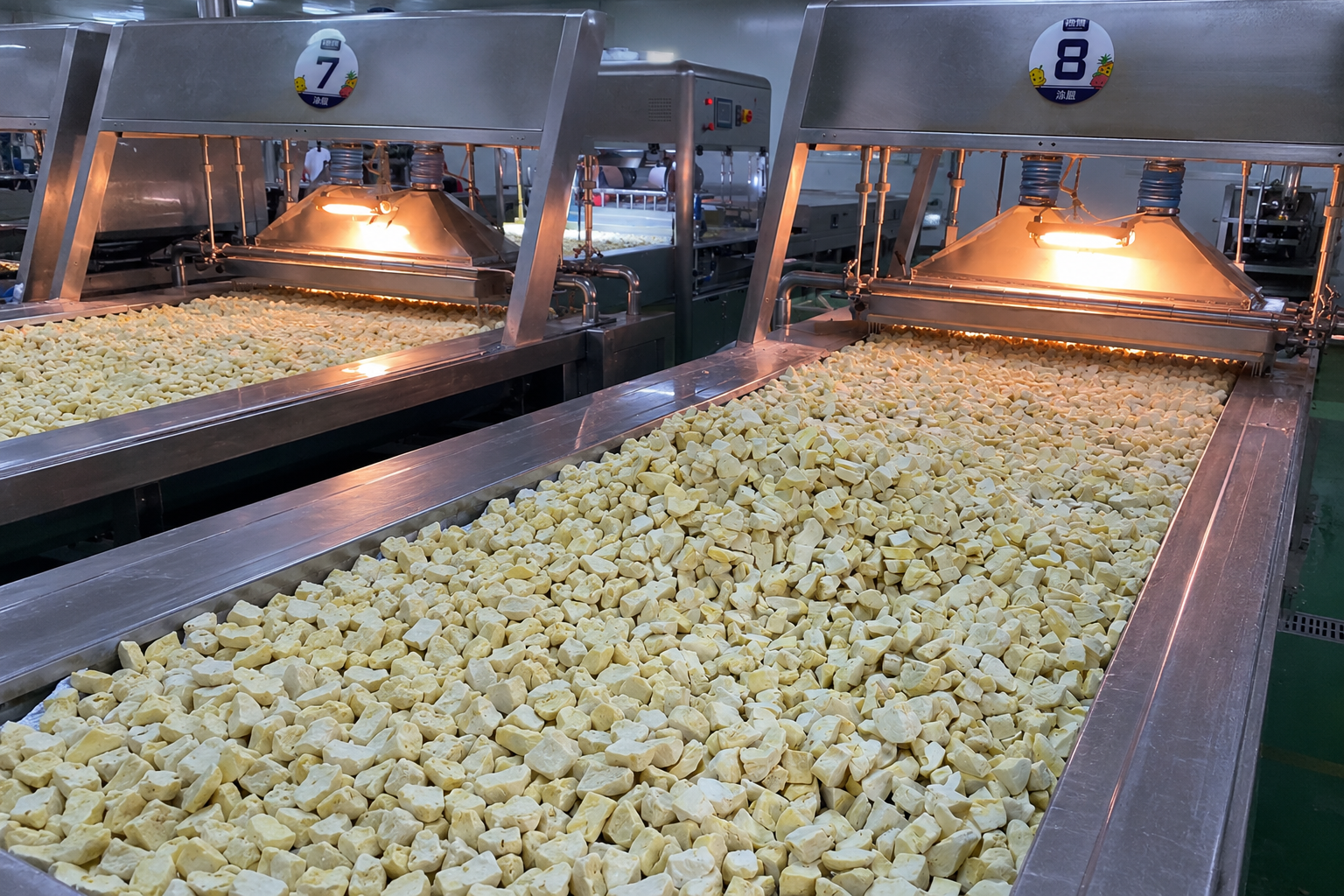
Whole freeze-dried durian chunks work as a premium, shelf-stable snack. The pure freeze-dried line contains only fruit, with no added sugar, preservatives, artificial colors, artificial flavors or thickeners. Coated freeze-dried durian formats, supported by an in-house coating line with more than four proprietary coating flavors, expand options for confectionery-style snacks.
Comparison Table: Durian Ingredient Forms at a Glance
| Durian form | Typical use | Shelf life and logistics | Cost-performance note |
|---|---|---|---|
| Fresh durian | Whole fruit retail, foodservice, short-distance premium programs | Perishable; cold chain and fast turnover required | Lower processing cost but higher waste and quality variability risk if post-ripening control is weak |
| Frozen durian pulp / IQF durian | Durian puree, ice cream, bakery filling, large-volume processing | Frozen storage; cold chain required | Balances flavor delivery and cost for volume production; the dominant processed form by revenue |
| Freeze-dried durian chunks | Snacks, cereal toppings, bakery inclusions, retail bags | 12-24 months ambient; no cold chain; nitrogen-flushed sealed packaging | Higher unit cost due to freeze-drying; supports premium clean-label positioning and lower defect rate |
| Freeze-dried durian powder | Beverage mixes, bakery premixes, seasonings, clean-label flavor systems | 12-24 months ambient; no cold chain | High concentration per weight; useful for consistent flavor, clean label and easy blending |
FAQ
Are durian ingredients compliant for export to EU, US, Japan or Korea?
The authorized manufacturing entity behind UrSnacks holds U.S. FDA Food Facility Registration, BRCGS Food Safety, HALAL, ISO 22000 and SMETA. The company provides full traceability from orchard to factory, per-batch release testing and third-party type testing for microbial contamination, pesticide residues and heavy metals. These measures support maximum residue limit requirements for EU, US, Japan, Korea and Southeast Asia.
Can one supplier cover fresh, frozen and freeze-dried durian in a single order?
Yes. UrSnacks operates an in-house full supply chain from origin orchard to finished freeze-dried product across four integrated forms: fresh, frozen, freeze-dried finished and freeze-dried raw materials. It has more than 3,000 tons of annual freeze-drying capacity and 12 packaging lines, supporting cross-form consolidated shipment and reducing multi-supplier coordination.
Why is freeze-dried durian more expensive than fresh or frozen durian?
Freeze-drying uses low-temperature vacuum sublimation and is more energy-intensive than fresh or frozen processing. The clean-label freeze-dried line also uses 100% single-ingredient pure fruit, so raw material is the majority of unit cost. The higher unit cost is offset by a lower defect rate, fewer QC rejections, longer ambient shelf life and premium retail positioning.
What should a buyer request before a bulk durian ingredient order?
Request per-batch factory release testing, scheduled third-party type testing for microbial contamination, pesticide residues and heavy metals, per-batch Brix and acidity sampling, moisture content data, packaging validation records and full traceability documentation. Multi-dimensional testing should cover flavor and sensory, pesticide residues, microbiology, heavy metals, destructive and stress testing, moisture, texture and color.
What supplier capabilities support reliable durian ingredient lead times?
Reliable lead time depends on production capacity, raw material sourcing and logistics. UrSnacks has over 100,000 square meters of freeze-dried manufacturing and customization facilities, more than 3,000 tons of annual core freeze-drying capacity, 12 automated packing lines, origin pre-cooling warehouses and a logistics and warehousing center. For current scheduling, send your application and target volume to sales2@ursnacks.cn.
Conclusion
Choosing among fresh, frozen and freeze-dried durian forms should start with product target and logistics constraints. Frozen durian pulp is the practical industrial base for many processed products. Freeze-dried durian chunks and powder are ideal for shelf-stable, clean-label products that need longer distribution. Fresh durian serves whole-fruit retail and premium foodservice programs where speed and fruit identity matter most.
A supplier that controls the full chain across all four forms can simplify quality, compliance and cross-form consolidated orders. If you are evaluating durian ingredients for a new or existing product, UrSnacks can help you compare specifications for fresh, frozen, freeze-dried finished and freeze-dried raw material formats.
Contact Jerry Lu at sales2@ursnacks.cn or +86 18005073978 for ingredient specifications and current supply planning.