Strawberry Raw Materials: Fresh, IQF & Freeze-Dried Options for Food Brands
Introduction: What Are Strawberry Raw Materials?
Strawberry is one of the most versatile fruit raw materials in commercial food production. In the B2B supply context, “strawberry” is not a single product but a family of forms: fresh strawberries, IQF (individually quick-frozen) strawberries, freeze-dried whole berries, freeze-dried slices/pieces/powder, and strawberry puree. Each form has a different storage profile, processing behavior, application window, and cost position.
This guide walks food manufacturers, ingredient traders, and private-label buyers through the strawberry raw material landscape. It explains how each form is processed, where it is best used, and which sourcing factors matter most when you compare options.
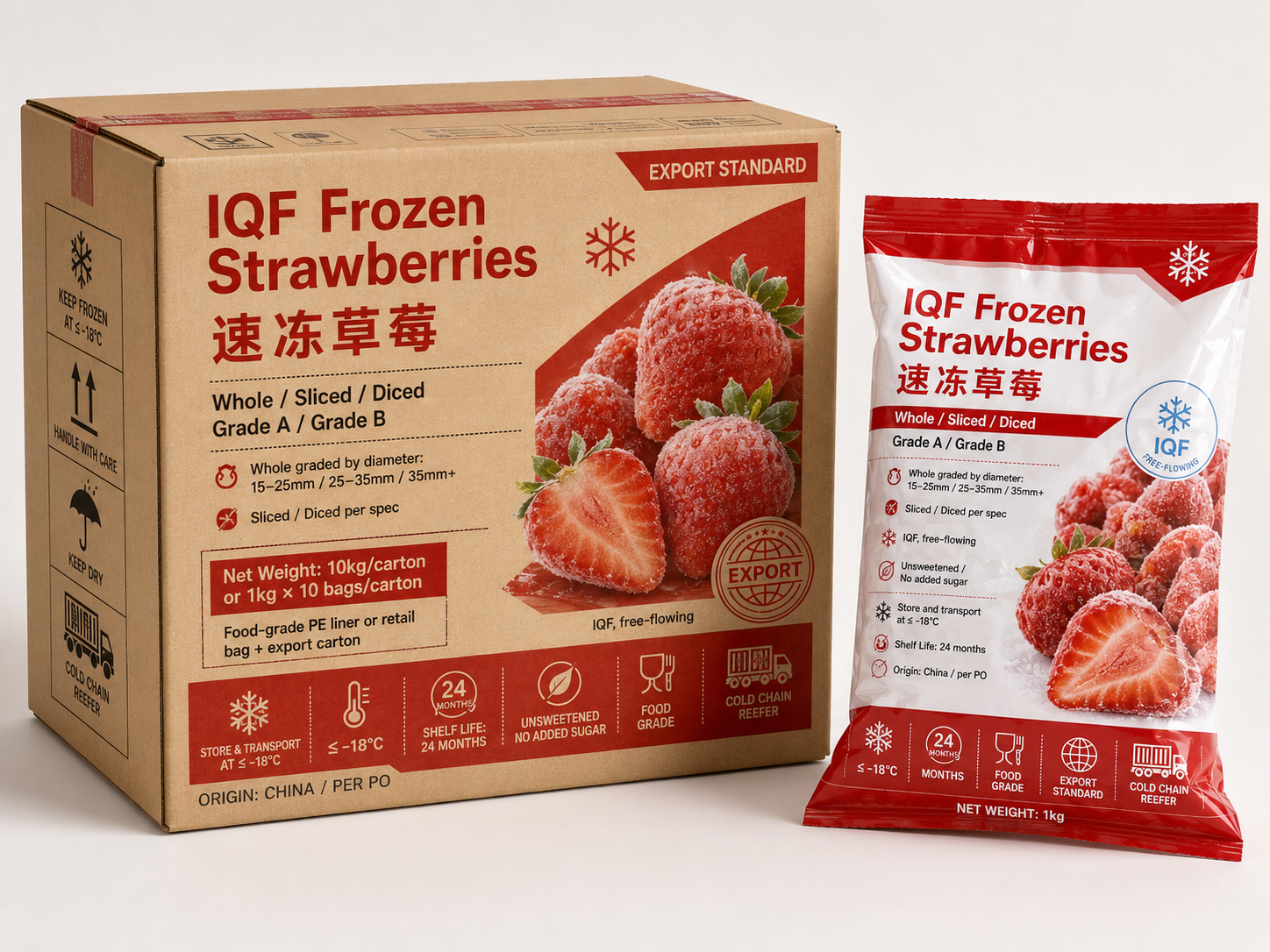
IQF strawberries are a standard frozen raw material for bakery, dairy, beverage, and food processing.
Why Strawberry Sourcing Is More Complex Than It Looks
The decision is rarely as simple as “fresh or frozen”. The right strawberry format must match your product recipe, production line, logistics capabilities, and target-market regulations. A bakery inclusion needs a different strawberry structure than a smoothie base. A yogurt topping needs a piece that stays crisp in a wet matrix. A beverage powder needs a fine mesh that dissolves quickly.
Meanwhile, buyers face seasonal availability for fresh fruit, cold-chain requirements for IQF, and a higher unit cost for freeze-dried strawberries. Specs also vary widely—whole berries are graded by diameter, pieces are defined by millimeter cuts, and powder is differentiated by mesh size. On top of that, export compliance from origin to destination must be confirmed, especially when selling into regulated markets such as the EU or markets requiring halal certification.
The core sourcing problem is therefore matching the strawberry format to both the product application and the supply chain. Understanding the trade-offs between shelf life, texture, flavor release, and cost is the first step to building a reliable strawberry ingredient strategy.
The Strawberry Ingredient Market at a Glance
Strawberry is one of the world’s most valuable berry crops. The global fresh strawberry market was valued at USD 21.0 billion in 2024 and is projected to reach USD 28.4 billion by 2033, according to WiseGuy Reports. The freeze-dried strawberry segment, while much smaller, is growing steadily—valued at approximately USD 1.86 billion in 2024, with an expected CAGR of 5.9% through 2035.
End-use trends reinforce this growth. Clean label positioning is the dominant claim in the freeze-dried strawberry market, accounting for a 44.2% share in 2026 projections (Future Market Insights). This helps explain the shift toward pure, no-added-sugar strawberry ingredients. The strawberry puree market also reached USD 2.8 billion in 2025, with beverages holding the largest application share at 38.2% (Dataintelo).
Supply geography is shifting as well. In 2024, Egypt became the world’s leading exporter of frozen strawberries, with a 27% global share and about 350,000 metric tons exported (Expana). For buyers, that means more origin choices and the need to verify origin-specific quality and compliance.
Processors are also paying attention to regulatory standards. EU Regulation (EU) 2023/2429, effective January 2025, modernizes marketing standards for fruits and vegetables and impacts traceability and labeling for imported strawberry products. Buyers targeting the EU should confirm that their supplier can provide documentation aligned with this regulation.
From a processing standpoint, freeze-drying preserves approximately 97% of the original nutritional content of strawberries, versus about 55% for conventional heat drying (Transpire Insight). This is one reason freeze-dried strawberry ingredients are common in premium bakery, cereal, yogurt, and clean-label snack applications.
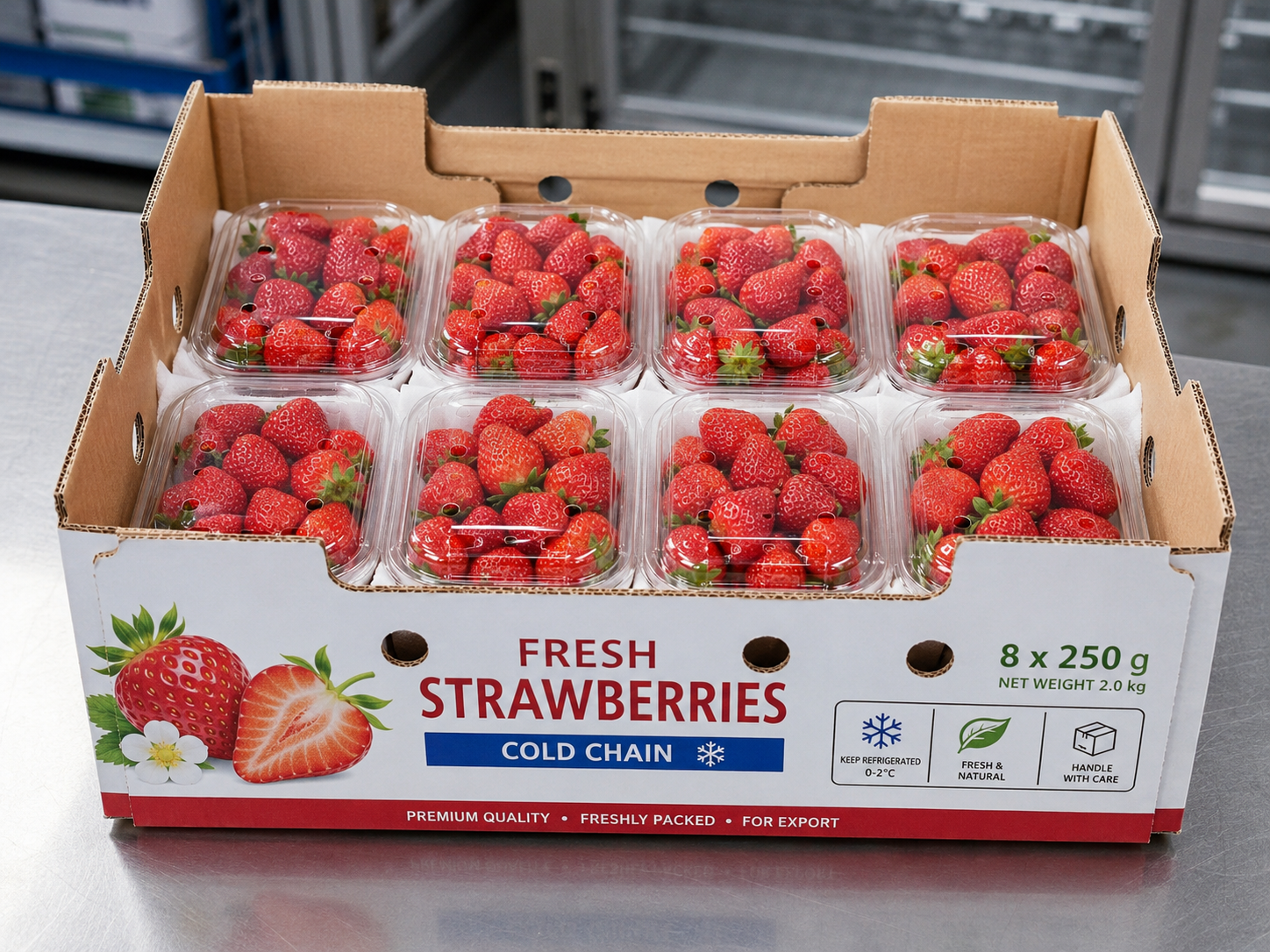
Fresh strawberries are typically packed in clamshell punnets with short shelf life and low-temperature logistics.
The Four Core Strawberry Raw Material Formats
For B2B buyers, strawberry raw materials fall into four main categories. Each category contains multiple SKU options, from pure whole fruit to custom-cut inclusions.
1. Fresh Strawberry
Fresh strawberries are sold in clamshell punnets or bulk cartons, usually graded by single-fruit weight. At UrSnacks, premium fresh strawberries are ≥25g per fruit; Grade A is 18–25g; Grade B is 12–18g. Common pack sizes include 250g and 500g punnets, with PET clamshell and ventilated cartons. Storage is ideally 0–2°C, with full cold chain at 0–4°C and no freezing. Shelf life is approximately 5–10 days depending on variety, maturity, and handling. For long-distance exports, air freight is preferred. Fresh strawberries fit fruit retail, fresh-cut, premium supermarkets, HoReCa, and bakery/tea-shop topping applications.
Key trade-offs: premium flavor and appearance, but short shelf life, seasonal supply, and the highest logistics risk.
2. IQF Frozen Strawberry
IQF (individually quick-frozen) strawberries are single-frozen, free-flowing fruit that can be supplied as whole, sliced, or diced. They are commonly graded by diameter (for example, 15–25mm, 25–35mm, or 35mm+), and packed in 10kg cartons or 1kg × 10 bags per carton. Storage and transport must be at ≤ −18°C. Shelf life is usually 24 months. Varieties can be confirmed per PO; common options include Sweet Charlie, Camarosa, and Senga Sengana. Fruit origin is mainly China (Shandong, Hebei, Liaoning) or other origins confirmed per PO. A typical MOQ for IQF strawberries is one 40-foot reefer container, approximately 24–26 metric tons.
IQF strawberries are widely used in bakery, jam and purée, beverage and smoothie, dairy and ice cream, foodservice, and general food manufacturing. Because they are frozen without added sugar, they offer a clean label base for further processing.
Key trade-offs: year-round availability and stable pricing, but requires frozen storage and full cold-chain discipline.
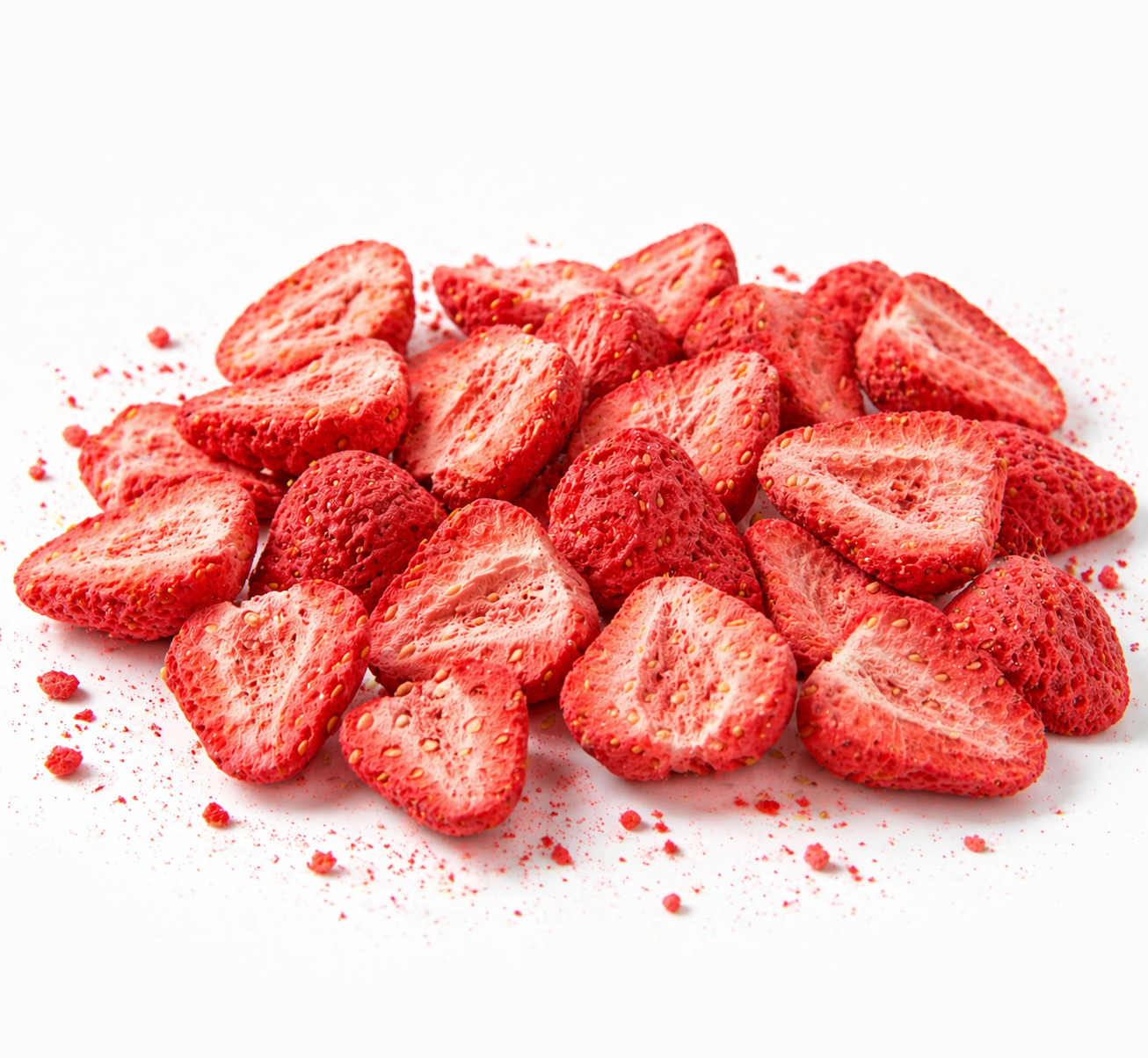
Freeze-dried strawberry halves and slices retain color, flavor, and crisp structure at ambient storage.
3. Freeze-Dried Whole Strawberry
Whole freeze-dried strawberries are made by vacuum freeze-drying at FD −40°C, preserving the original shape, color, and most of the nutritional content. In UrSnacks’ bulk range, whole berries are sized by diameter: S 25–30mm, M 30–35mm, L 35–40mm, with a maximum length under 55mm. They are packed in 3.2–3.5kg aluminum foil bags inside cartons. Moisture content is ≤5%, and shelf life is 18 months under cool, dry, light-protected storage. Key varieties include Dandong Hongyan (a National GI product) and Shandong Miaoxiang.
Whole freeze-dried strawberries are suitable for direct snacking, chocolate enrobing, premium cereal toppings, and OEM finished-product applications.
4. Freeze-Dried Strawberry Slices, Pieces & Powder
Beyond whole berries, freeze-dried strawberries are available as slices, dice, granules, and powder.
- Slices: length <55mm with a cut face of 30–35mm; used in cereal, yogurt, bakery, and direct snacking.
- Pieces/Dice: regular 5–8mm, fine granules 3–5mm for granola bars/cereals, and large dice 8–10mm; used in chocolate, snack/protein bars, and bakery inclusions. Custom cuts can be requested.
- Powder: 60–80 mesh for bakery inclusions, 80–100 mesh as the standard grade, and 100–120 mesh for drinks and instant mixes. Used in beverages & smoothies, bakery & confectionery, dairy & yogurt, and ice cream.
All freeze-dried formats share the same moisture (≤5%), shelf life (18 months), and aluminum foil bag packaging. They are typically stored at ambient temperature in a cool, dry, light-protected warehouse, making them easier to handle than frozen products in many supply chains.
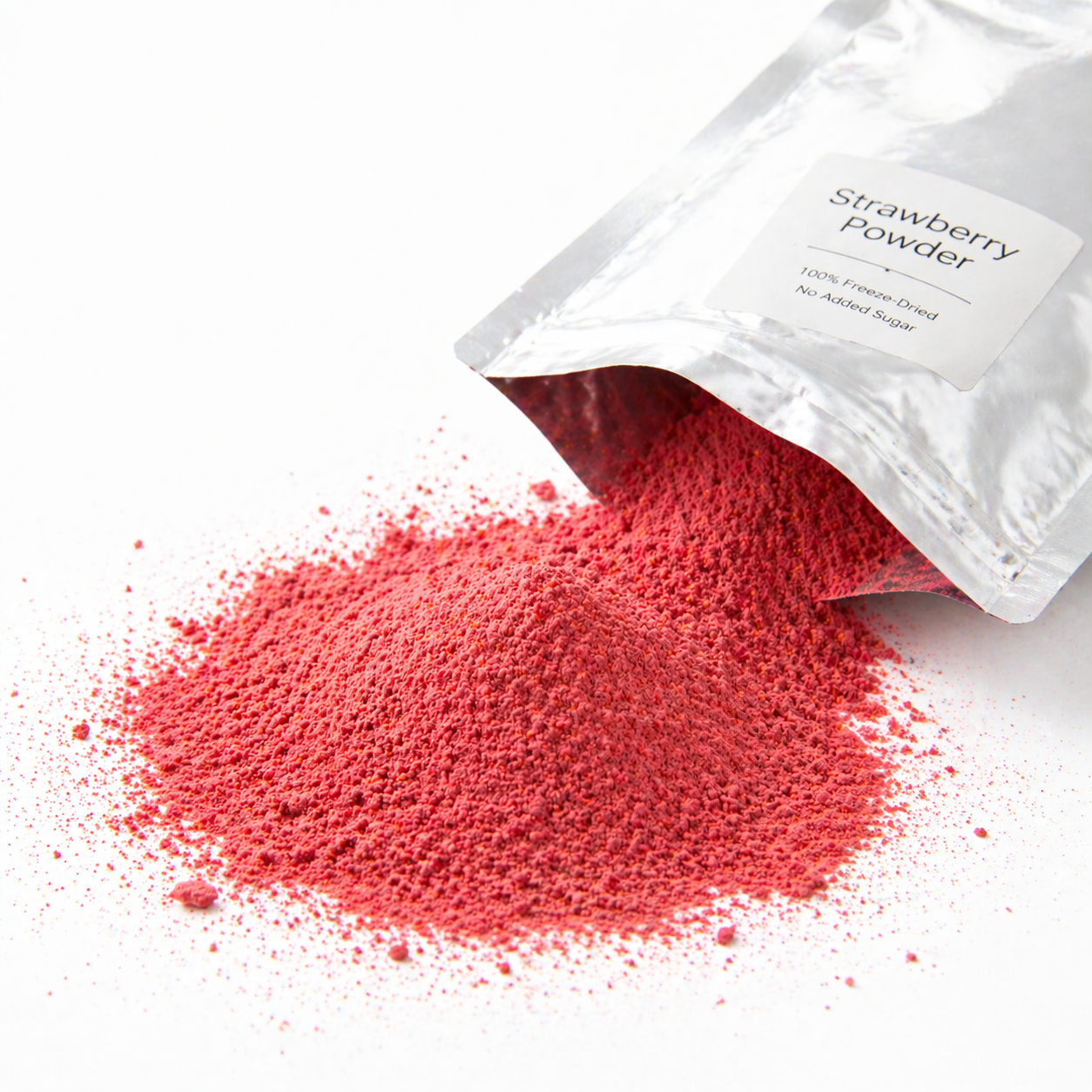
Freeze-dried strawberry powder is available in multiple mesh sizes for bakery, beverage, and dairy applications.
Beyond raw ingredients: Coated Freeze-Dried Strawberry
UrSnacks also produces coated freeze-dried strawberry snacks—whole or diced strawberries coated with original, chocolate, matcha, or cheese coatings. These are retail-ready finished products rather than bulk raw materials, but they show how freeze-dried strawberry can be built into higher-value consumer SKUs. For B2B buyers, the same manufacturing infrastructure can support OEM and private-label development.
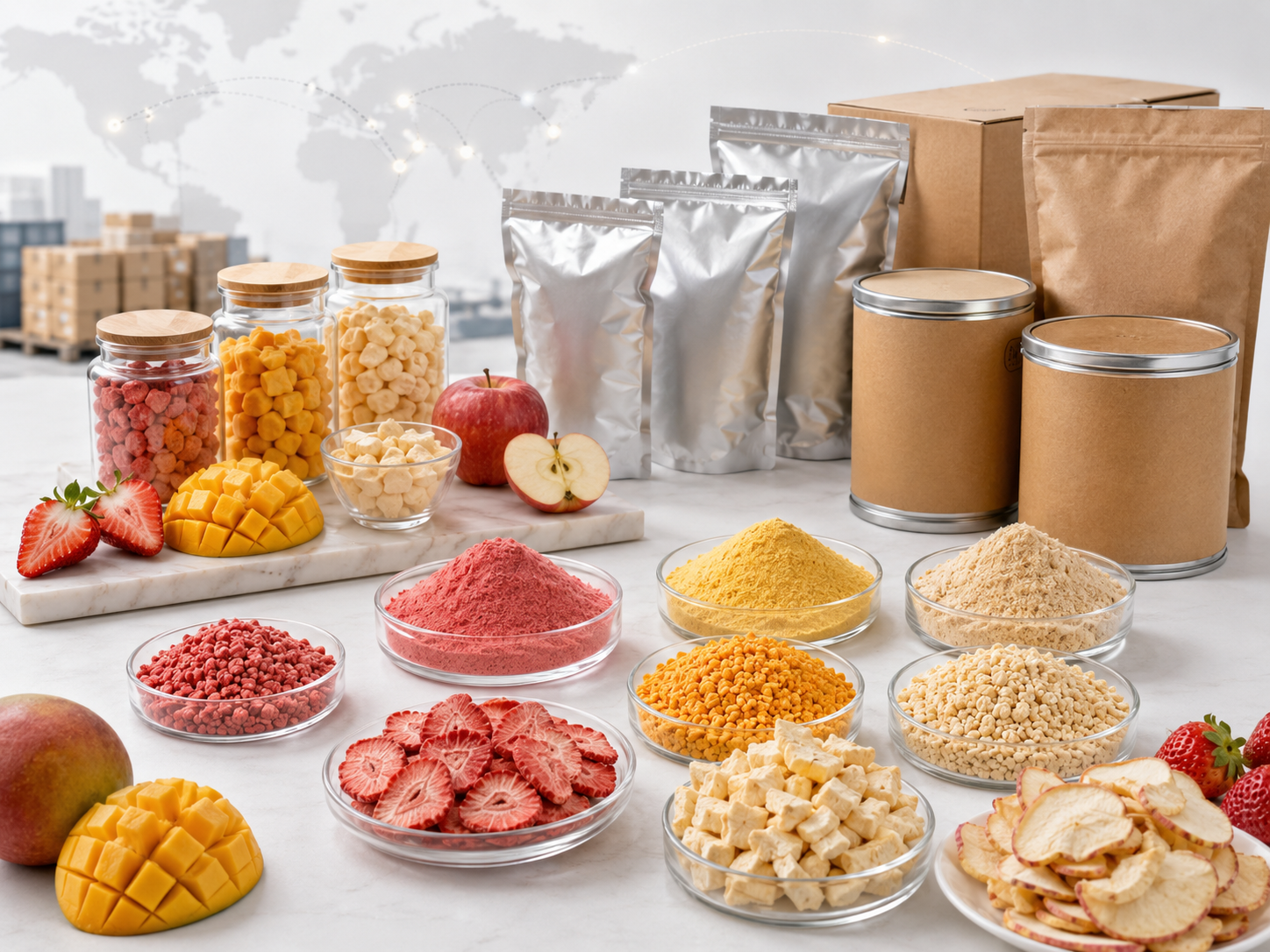
Freeze-dried fruit ingredients are supplied in bulk for food manufacturing, repacking, and foodservice.
How to Select and Source Strawberry Raw Materials: Step-by-Step
The following steps translate application needs into a sourcing decision. They represent the standard workflow used by food manufacturers when evaluating strawberry raw materials.
Step 1: Define the application and processing condition
Start with the final product. If you are making a wet filling or smoothie, IQF or purée is usually more practical. If you need crisp inclusions in cereal or a dry topping, freeze-dried pieces or slices are the better choice. If the product will be baked or enrobed, whole freeze-dried berries or coarse dice may be required.
Step 2: Match the format and specification
Select the format—whole, sliced, diced, or powder—and confirm the grade, size, mesh, and packaging. For IQF, confirm whether the fruit should be whole, sliced, or diced and which diameter/size is acceptable. For freeze-dried ingredients, confirm the exact cut size and powder mesh.
Step 3: Verify food safety and market compliance
Check the supplier’s certifications and export compliance. UrSnacks’ manufacturing entity holds BRCGS Food Safety, ISO 22000, HALAL, SMETA, and SC (China Food Production License), and has completed U.S. FDA Food Facility Registration. For European imports, confirm that traceability and labeling meet Regulation (EU) 2023/2429 requirements.
Step 4: Request specifications and test samples
Ask for a detailed specification sheet, including moisture content, packaging, and MOQ. Because freeze-dried strawberry is highly hygroscopic, samples should arrive in sealed moisture-barrier packaging. Use the sample to test texture, color, flavor release, and behavior in your specific processing line.
Step 5: Validate logistics and storage capability
Fresh strawberries require a short 0–4°C cold chain; IQF requires −18°C storage and reefer shipment; freeze-dried products require ambient dry storage with moisture protection. Ensure your facility can maintain the required temperature and humidity before signing a contract.
Step 6: Agree on commercial terms and production capacity
Confirm MOQ, pricing, lead time, and whether the supplier supports OEM/private-label packing. For IQF strawberries, container-level MOQs are typical. For freeze-dried ingredients and finished retail formats, MOQs are set per product line and can be confirmed with the supplier’s business team.
Strawberry Ingredients Across Applications
The table below is derived from commonly requested B2B scenarios. Each application emphasizes a different strawberry property.
| Application | Preferred Strawberry Formats | Why It Works | Typical Use Mode |
|---|---|---|---|
| Bakery & Confectionery | Freeze-dried pieces, powder; IQF sliced | No moisture migration into dough, no color bleeding in white batters, natural flavor, extended finished-goods shelf life | Fold into dough, sprinkle on batter, embed in fillings, coat with chocolate |
| Cereal & Breakfast | Freeze-dried slices, pieces | Crunch retention, natural color, clean-label story, shelf-stable at ambient | Dry-blend into granola/muesli before packing |
| Yogurt & Dairy | Freeze-dried pieces, powder; strawberry purée | Real fruit bite, natural color/flavor, no thawing needed for FD formats | Blend powder into base, fold chunks into ice cream, swirl purée |
| Beverage & Smoothie | Freeze-dried powder, IQF whole/sliced, purée | Fast dissolution, intense flavor, authentic fruit color | Disperse powder in instant mixes; blend IQF or purée into drinks |
| Direct Snacking & E-commerce | Whole freeze-dried, coated freeze-dried | Lightweight, no cold chain, real-fruit snack, long shelf life | Single-serve packs, subscription boxes, retail gifting |
Strawberry Raw Material Comparison Table
This comparison distills the key commercial differences between the main strawberry forms.
| Form | Storage Conditions | Shelf Life | Example Specs | Typical Applications | Commercial Notes |
|---|---|---|---|---|---|
| Fresh Strawberry | 0–2°C recommended; 0–4°C cold chain | Approx. 5–10 days | Premium ≥25g; Grade A 18–25g; Grade B 12–18g | Retail, fresh-cut, HoReCa, bakery topping | Air freight for long distance; clamshell pack |
| IQF Strawberry | ≤ −18°C | Usually 24 months | Whole 15–25mm / 25–35mm / 35mm+; sliced or diced | Bakery, jam & purée, beverage, dairy, ice cream, food manufacturing | MOQ approx. one 40ft reefer container (24–26 MT) |
| FD Whole | Ambient, cool & dry | 18 months | Length <55mm; dia. S 25–30mm, M 30–35mm, L 35–40mm | Snacking, chocolate enrobing, premium cereal topping | Moisture ≤5%; 3.2–3.5kg foil bag |
| FD Slices | Ambient, cool & dry | 18 months | Length <55mm × cut face 30–35mm | Cereal, yogurt, bakery, direct snacking | Moisture ≤5%; foil bag + carton |
| FD Pieces/Dice | Ambient, cool & dry | 18 months | Regular 5–8mm; fine 3–5mm; large 8–10mm | Cereal, chocolate, snack bars, bakery inclusions | Custom cuts available |
| FD Powder | Ambient, cool & dry | 18 months | 60–80 mesh; 80–100 mesh; 100–120 mesh | Beverage, bakery, dairy, yogurt, ice cream | Choose mesh to match solubility or texture |
All freeze-dried strawberry formats from UrSnacks use vacuum freeze-drying at FD −40°C, with ≤5% moisture and 18-month shelf life, unless otherwise stated in the product specification.
Frequently Asked Questions About Strawberry Sourcing
Does UrSnacks offer halal-certified freeze-dried strawberry ingredients?
Yes. The manufacturing entity behind UrSnacks holds HALAL certification, as well as BRCGS Food Safety, ISO 22000, SMETA, and SC (China Food Production License), and has completed U.S. FDA Food Facility Registration. If you have a specific certification requirement for your destination market, the business team can confirm the applicable documentation.
Can I buy bulk IQF strawberries for jam and beverage production?
Yes. UrSnacks supplies IQF strawberries in whole, sliced, or diced forms, packed in 10kg cartons or 1kg × 10 bags per carton. The product is stored and shipped at ≤ −18°C and has a usual shelf life of 24 months. Grade, size, variety, and origin are confirmed per PO. A typical MOQ is one 40-foot reefer container, approximately 24–26 metric tons.
What freeze-dried strawberry formats are available for bakery or cereal applications?
For bakery and cereal, the most common formats are freeze-dried strawberry slices, pieces/dice, and powder. Pieces are available in 5–8mm regular cuts, 3–5mm fine granules, or 8–10mm large dice. Powder is available from 60–80 mesh (coarse) up to 100–120 mesh (fine). All formats have moisture ≤5% and are packed in aluminum foil bags with a shelf life of 18 months.
What is the MOQ for bulk freeze-dried strawberry ingredients?
MOQs for freeze-dried strawberry ingredients depend on the selected form, cut size, and packaging. Commercial details such as MOQ, price, and lead time are confirmed with the UrSnacks business team. For IQF strawberries, the standard MOQ is container-level (approximately 24–26 MT per 40ft reefer).
How can I get more information or a quotation for strawberry raw materials?
You can contact the UrSnacks B2B team directly to discuss your application, request specifications, and get a tailored quote. Email sales2@ursnacks.cn or WhatsApp +86 18005073978. For a quick overview of product capabilities, you can also view the company brochure below.
Building a Strawberry Ingredient Strategy: Key Takeaway
Fresh, IQF, and freeze-dried strawberries each occupy a distinct role in the ingredient supply chain. Fresh strawberries offer premium visual appeal but require fast logistics. IQF strawberries provide an accessible, stable frozen base for processing. Freeze-dried strawberries deliver longer ambient shelf life, cleaner label potential, and a crisp texture that works well in a wide range of finished foods.
The right choice depends on your application, your storage capabilities, and your target market. A supplier with full-line capability can reduce complexity: UrSnacks—a brand of FUJIAN YOULINGYOUSHI TECHNOLOGY CO., LTD., whose brand was founded in 2016 and whose corporate entity was registered in 2020—supplies strawberry raw materials across fresh, IQF, freeze-dried ingredients, and finished freeze-dried snacks. The company is based in Jinjiang, Quanzhou, Fujian, China, and operates more than 100,000 m² of manufacturing and customization facilities, with an internal R&D team of 10 engineers and a combined annual capacity of 3,000+ metric tons across core freeze-dried categories. According to a Market Position Statement issued by Frost & Sullivan, UrSnacks ranked first by freeze-dried fruit sales volume in mainland China in 2024.
If you are evaluating strawberry raw materials for a new product or a supplier change, request the specification sheet and sample details from the UrSnacks team before finalizing your formulation. A structured comparison of your process requirements against the storage and application data in this guide is the most reliable way to choose the strawberry format that adds real value to your product.
Next step: Request the UrSnacks strawberry brochure and sample information
Download the company brochure: UrSnacks Brochure (PDF)
Email: sales2@ursnacks.cn | WhatsApp: +86 18005073978